
BEYOND EXPERTISE
BEYOND EXPERTISE

Why Important Actions Don’t Get Done: Is It Clarity, Capacity, Capability or Accountability
Most business owners have experienced this.
You have a useful meeting. An important issue is discussed. Someone agrees to take responsibility for an action. Everyone leaves thinking progress has been made.
Then the week gets busy. Clients call, problems appear and urgent work takes over. By the time the action is due, it still isn't complete.
The natural reaction is often:
“Why didn't this get done?”
And sometimes the conclusion follows just as quickly:
“We have an accountability problem.”
Maybe you do. But maybe you don't.
The fact that something wasn't done tells you what happened. It doesn't necessarily tell you why.
Before calling it an accountability problem, consider six possibilities:
Clarity → Capacity → Capability → Authority → Priority → Accountability
Was the commitment clear? Did the person realistically have time to complete it? Did they know how? Did they have the authority they needed? Did the action remain a genuine priority? Or were all of those things in place and they simply failed to honour the commitment?
I think of this as an Execution Diagnostic.
The distinction matters because each problem requires a different management response. If you diagnose the wrong problem, you are likely to apply the wrong solution.
1. Clarity: Did They Actually Know What “Done” Meant?
Agreeing that something matters is not the same as owning the result.
Someone can agree that an issue matters without accepting responsibility for resolving it. Likewise, a useful conversation can finish with everyone thinking they understand what happens next, when nobody has actually defined the commitment.
You might leave a meeting with actions such as:
“Look at the reporting.”
“Improve the quoting process.”
“Speak to the team.”
“Sort out recruitment.”
“Review the website.”
They may sound clear in the room. A week later, they can mean almost anything.
What does “review the website” mean? Look at it? Create recommendations? Obtain three quotes? Approve a redesign? Launch something new?
A meaningful commitment should establish four things:
What will actually be completed?
Who owns it?
By when?
What does “done” look like?
Consider the difference between:
“Improve the quoting process.”
and:
“By Wednesday afternoon, Michael will map the current quoting process, identify the three main causes of delay and present a proposed new workflow at Thursday's management meeting.”
The second version has a visible finish line.
If an action hasn't been completed, start by asking whether both people could have described the expected result in the same way. If not, you may not have an accountability problem at all.
You may have a clarity problem.
Management response: Define the commitment properly before criticising the person.
2. Capacity: Did They Realistically Have Room to Do It?
Business owners often make a subtle mistake when assigning new work.
They add without subtracting.
This is particularly common as a business grows and senior employees become “player-managers”. They are expected to manage people and improve the business while still looking after clients, completing technical work, solving problems and meeting existing deadlines.
Then another important project is added.
Nothing else changes.
The new action may be clear and the person may genuinely want to deliver it. But where is the time supposed to come from?
This is why one of the most useful questions you can ask before accepting a significant commitment is:
“If this becomes a priority, what existing work needs to move to make room for it?”
Perhaps something should move. Perhaps lower-value work should be delegated. Perhaps additional support is needed. Perhaps the deadline isn't realistic.
Or perhaps, after looking at the workload properly, the person does have sufficient capacity and needs to organise their time differently.
That distinction matters.
Capacity should not become an automatic excuse and an employee shouldn't simply decide that being busy removes the commitment. The point is to have an honest conversation about competing priorities before the deadline is missed.
Management response: Reprioritise, resource differently, delegate lower-value work or renegotiate the commitment.
3. Capability: Did They Know How to Do It?
Responsibility does not automatically create competence.
Imagine you promote your best estimator to manage three people. Six weeks later, you're frustrated because performance issues within the team aren't being addressed.
Your new manager understands that managing performance is part of the role. They have enough time and authority to do it.
But nobody has ever taught them how to set clear expectations, give difficult feedback or manage underperformance.
Is that primarily an accountability problem?
Probably not.
As businesses grow, good technicians become team leaders, strong salespeople become sales managers and capable consultants begin managing other people. The skills that made someone successful in their previous role are not always the skills required in the new one.
Before concluding that somebody needs to “take more ownership”, ask:
Do they know what good looks like?
Have they done something similar before?
Do they understand how to approach it?
Do they need training, coaching or guidance?
Are you expecting experience they haven't yet developed?
People should be stretched as they grow. But there is a difference between a stretch assignment and an impossible assignment.
Management response: Develop the person, provide appropriate support or reconsider who should own the work.
4. Authority: Were They Actually Allowed to Get It Done?
This is one of the most common problems I see in owner-managed businesses.
The owner delegates responsibility but keeps the decisions.
A manager is told:
“You're responsible for recruitment.”
But they can't approve the salary, choose the recruiter, approve advertising spend, make an offer or decide whether the role needs to change.
They technically own the outcome, but almost every meaningful decision still comes back to the owner.
That isn't genuine delegation.
If someone is accountable for a result, ask:
What decisions are they actually authorised to make without you?
Giving somebody authority doesn't mean giving them unlimited freedom. Good delegation defines the boundaries.
People should understand:
what they can decide themselves;
what requires consultation;
what needs approval; and
what should be escalated immediately.
For example, a business might decide that issues below an agreed financial or risk threshold can be handled independently. Above that threshold, the employee might be expected to define the problem, identify several options and bring their recommended solution to their manager for approval.
Now there is structure.
The employee doesn't need to sit there worrying about whether they are allowed to act, but nor do they need to bring every minor decision back to the owner.
Management response: Define decision rights and transfer sufficient authority alongside responsibility.
5. Priority: Was It Really a Priority?
Everything cannot be important.
If your business has fifteen priorities, it can quickly feel as though it has none.
This becomes particularly challenging in entrepreneurial businesses because owners are often very good at seeing new opportunities and problems.
A marketing idea appears on Monday. A recruitment issue emerges on Tuesday. A new service opportunity arrives on Wednesday. By Friday, the team is working on several priorities that didn't exist at the start of the week.
Over time, the team can learn to wait and see whether the priority lasts.
That doesn't necessarily mean people are lazy or unwilling to commit. They may simply have experienced priorities changing often enough that they become cautious about investing too heavily in the latest one.
A priority is not defined only by what leadership says is important. It is also demonstrated by where time is allocated, what receives resources, what gets reviewed and what remains protected when something urgent appears.
So when an action slips, ask:
“Did they fail to prioritise it, or did leadership fail to protect the priority?”
Sometimes the employee genuinely failed to manage their priorities.
Sometimes leadership changed the game.
Management response: Reduce competing priorities and maintain leadership consistency.
6. Accountability: Or Did They Simply Fail to Honour the Commitment?
Now we arrive at accountability.
Run the test.
The requirement was clear. The person accepted ownership. They had reasonable capacity. They knew how to do the work. They had the authority and resources they needed. Leadership maintained the priority.
And they still didn't do it.
Now you may genuinely have an accountability or behavioural issue.
That doesn't mean becoming angry or punitive. A useful accountability conversation might start with five questions:
What happened?
When did you first know the commitment was at risk?
What did you do at that point?
What do you recommend we do now?
What needs to change next time?
Healthy accountability isn't about catching people out. It is about creating a business in which commitments mean something.
If somebody says they will do something, other people should generally be able to rely on that commitment. And if circumstances genuinely prevent delivery, the expectation should be that the risk is raised early rather than hidden until the deadline.
Management response: Address the behaviour directly, establish a clear recommitment and deal appropriately with repeated patterns.
The Execution Diagnostic
The next time an important action is overdue, resist the temptation to jump immediately to accountability.
Work through the Execution Diagnostic in order:
1. Was the commitment clear?
If no → Clarity
Define the expected outcome, owner, deadline and finish line.
2. Did they realistically have the capacity?
If no → Capacity
Reprioritise, delegate or resource appropriately.
3. Did they know how to deliver it?
If no → Capability
Provide training, coaching or support - or assess whether the person is genuinely suited to the responsibility or role.
4. Did they have the authority and resources required?
If no → Authority
Clarify decision rights, approvals and escalation points.
5. Did leadership keep it as a genuine priority?
If no → Priority
Reduce competing demands and protect what matters.
6. Were all of those things present, but the commitment still wasn't honoured?
If yes → Accountability
Address the behaviour and recommit.
Same symptom. Different diagnosis. Different management response.
But Don't Diagnose Everything Except Accountability
There is a trap on the other side of this framework.
Once you become more thoughtful about why people miss commitments, it can become easy to explain everything away.
“That wasn't clear.”
“I was too busy.”
“I didn't know how.”
“I needed approval.”
“Something more urgent came up.”
Sometimes those explanations are completely legitimate. Sometimes they aren't.
Curiosity is appropriate for an exception. A pattern requires accountability.
If expectations were unclear, clarify them. If capacity was genuinely inadequate, address it. If the person lacked the necessary capability, provide development and support - or reassess whether they are genuinely suited to the responsibility or role.
But once those issues have been addressed, repeatedly failing to honour reasonable commitments requires a more direct conversation.
Good management isn't about avoiding accountability. It is about applying it fairly.
The Owner May Be Part of the Problem
There is another uncomfortable possibility worth considering.
Before asking why your team isn't accountable, examine the environment in which you are asking them to perform.
Ask yourself:
Did I make the expectation clear?
Did I overload the person?
Did I delegate responsibility but retain authority?
Did I keep changing the priority?
Did I provide the support they reasonably needed?
Do I repeatedly step in and rescue people when things become difficult?
That final question matters.
Owners often rescue people because they care deeply about the result. A deadline approaches, an important action is behind, so the owner steps in and finishes it.
The immediate problem gets solved.
But if this happens repeatedly, the unintended lesson can become:
“If I don't complete it, the owner eventually will.”
That can reinforce exactly the owner-dependence you are trying to remove.
Before asking why your team isn't accountable, consider whether the way you lead makes accountability possible.
Create a Rhythm That Closes the Loop
Even a well-defined commitment can disappear once the week gets busy. Client issues arise, operational problems demand attention and urgent work begins pushing out important work.
This is why important commitments need a predictable point where they come back into view.
A meeting rhythm can bridge the gap between idea and execution
A simple execution loop might look like this:
Discuss → Decide → Assign → Act → Review
An idea is discussed and a decision is made. Someone accepts responsibility and goes away to do the work. A regular review then closes the loop by bringing that commitment back into view.
For example, at this week's management meeting:
“Sarah, you'll document the new quoting process by next Thursday.”
At the next review:
“Sarah, last week we agreed you'd have the quoting process documented. How did you go?”
If it's complete, acknowledge it and move forward.
If it isn't, ask:
“What got in the way?”
Now you're back to the Execution Diagnostic.
Was it clarity, capacity, capability, authority, priority or accountability?
A meeting rhythm doesn't create execution by itself. But a consistent rhythm of commitment, action and review can provide an important bridge between a good idea and actually implementing it.
Look forwards as well as backwards
A good review rhythm should not only discover missed commitments after the event.
It should surface problems early.
A useful standard is:
“If you're going to miss the commitment, I shouldn't find out on the due date.”
Encourage people to raise risks while something can still be done about them.
Instead of:
“Sorry, I didn't get it done.”
you want to hear:
“This is at risk. Here's what's getting in the way, here are the options, and this is what I recommend we do.”
That is not avoiding accountability.
It is responsible management.
Your meetings should therefore look in both directions:
Looking backwards: Did we do what we said we would do?
Looking forwards: What is at risk, blocked or likely to prevent the next commitment from being delivered?
Accountability shouldn't depend on the owner's memory
If you constantly have to remember everything your team has promised and chase each person individually, that becomes increasingly difficult to scale.
Important commitments should instead sit within an appropriate management rhythm. Depending on the business, that might include weekly management meetings, project reviews, department meetings or regular one-to-ones.
The precise frequency matters less than the principle:
Important commitments should have a predictable point where they return to view.
That does not mean adding meetings for the sake of meetings. A calendar full of meetings can still produce very little execution.
A useful review brings back into view:
commitment + owner + outcome + deadline + current status
The purpose isn't to interrogate people. It is to keep important work visible, surface obstacles early and close the loop on what was previously agreed.
A Simple Framework for Your Next Management Meeting
You can put all of this into practice immediately.
For every meaningful action agreed in your next management meeting, establish seven things:
1. Outcome
What needs to be achieved?
2. Owner
Who is ultimately accountable for making it happen?
Several people may contribute, but one person should generally own moving the action to completion.
3. Deadline
When will it be complete?
Use a specific date rather than “soon” or “next week”.
4. Definition of Done
What specifically constitutes completion?
Make the finish line visible.
5. Capacity
Where will the work fit?
What may need to be stopped, delegated or deprioritised?
6. Authority
What can the person decide themselves?
What requires approval or escalation?
7. Review
When will progress be discussed again?
That final question is easy to overlook:
When and where will this commitment come back into view?
Without a clear answer, even a well-defined action can disappear beneath the everyday demands of running the business.
Where Is Execution Breaking Down in Your Business?
Take one important overdue commitment in your business and run it through the Execution Diagnostic:
Clarity → Capacity → Capability → Authority → Priority → Accountability
Then ask:
When will this commitment come back into view?
If you're still the person who has to remember, chase, approve or rescue important work across the business, accountability may only be part of the problem.
Building a business that can run mostly without you requires clear responsibilities, appropriate authority, capable people and management rhythms that keep important commitments moving.
That is exactly the kind of work I help established business owners with. If you'd like to discuss where execution may be breaking down in your business and whether I may be able to help, you can book a 15-minute introductory call here.

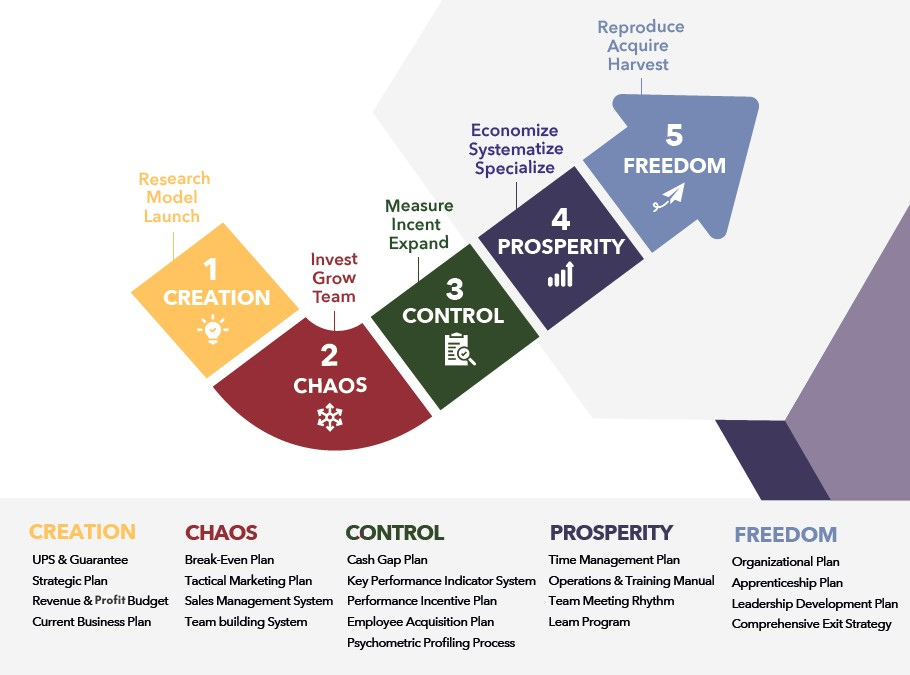
Free Methodology Presentation: Learn Our Proven 5-Step System For Transforming Your Business Into A Firm That Runs Smoothly, Profitably and (mostly) Without You
Free Methodology Presentation: Learn Our Proven 5-Step System For Transforming Your Business Into A Firm That Runs Smoothly, Profitably and (mostly) Without You.
Confirm Your Details To Continue
Confirm Your Details To Continue
Schedule a call to see if our approach can help take your business to #1 in your market.
No pie-in-the-sky. No generic ideas.
No hard sell.
Just straight-forward analysis of your approach to marketing and sales, team-building skills, gross and net profitability, and business transfer readiness.