
Your Business Growth Partner
GUIDING THE 'BEST KEPT SECRETS' TO #1 IN THEIR MARKET
Trent Butler is a Chartered Accountant who acts as a Business Coach, Growth Advisor and Marketing Strategist to growth-minded professional service business owners.
We'll help you increase your profits, implement systems to improve operations and build a team that can operate without you - giving you the money and freedom to live the life you want.
Your Business Growth Partner
GUIDING THE 'BEST KEPT SECRETS' TO #1 IN THEIR MARKET
Trent Butler is a Chartered Accountant who acts as a Business Coach, Growth Advisor and Marketing Strategist to growth-minded professional service business owners.
We'll help you increase your profits, implement systems to improve operations and build a team that can operate without you - giving you the money and freedom to live the life you want.
Just a few of the 'best kept secrets' we've worked with:

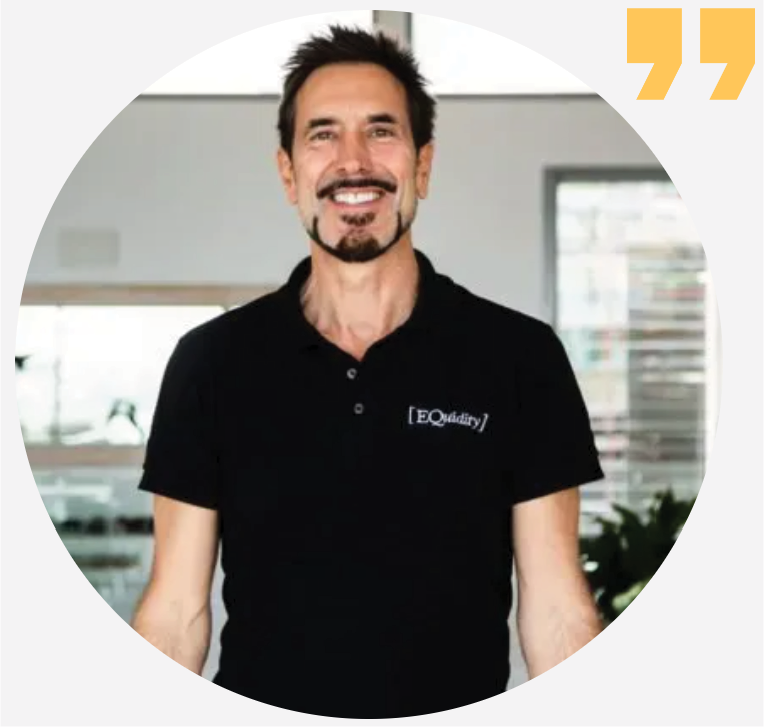
"I was attracted to Trent's clarity of what could be achieved, his process driven approach to achieving objectives, coupled with his knowledge and experience. It's been absolute pleasure working with Trent and his team. I am extremely pleased with the results...”
Giles Hill
Director, EQ Property
The Truth Is You Have A Lot On Your Plate When It Comes To Being #1 In Your Market...
You Might Be Struggling With:
Identifying & attracting the right type of higher-value client
- Past efforts have attracted the wrong type of client.
- Prospects just want to know 'price' and don't seem to care about anything else.
- Leads seem to take forever to sign-up and become a client.
You just want to attract higher-value clients who value your expertise and expect to pay a fair premium to work with you.
Monitoring cash flow & tracking return on investment
- You’re unsure what metrics to be tracking.
- You’re not clear on what benchmarks to aim for.
- You're not sure if your marketing is making or losing money.
You just want to understand dollars-in vs dollars-out and whether or not it's all worth it.
Developing process and people to handle the next growth phase
- Growth is starting to cause other operational challenges.
- Getting the right people in the right seats has become easier said than done.
- The team can never quite seem to follow process or consistently achieve what is expected.
- You're getting pulled in a hundred different directions and clients are beginning to notice.
You just want to get everyone on the same page and following processes that actually work and scale.
Figuring out what to do and what not to do next from a marketing and business development standpoint
- Exactly who is our ideal client and how do we get more of them?
- Just what is our point of difference (or do we even have one)?
- Do people see us as a commodity service provider?
- What 'tactics' would work best specifically for our firm and stage of business?
- Where should we be spending our marketing dollars and efforts?
You just want to know what you should be doing and why.
Aligning the leadership team on strategy, planning and execution
- The leadership team is losing sight of the bigger picture (core mission, vision and values).
- Key team members just can't seem to agree on what should be done next, how and why.
- Problems use to be handled quickly but now take weeks/months to resolve.
- Important but not urgent activities are just not getting done.
You just want everyone in the business aligned and beating to the same drum.
Just a few of the 'best kept secrets' we've worked with:





"I was attracted to Trent's clarity of what could be achieved, his process driven approach to achieving objectives, coupled with his knowledge and experience. It's been absolute pleasure working with Trent and his team. I am extremely pleased with the results...”
Giles Hill
Director, EQ Property
THE TRUTH IS YOU HAVE A LOT ON YOUR PLATE WHEN IT COMES TO BEING #1 IN YOUR MARKET...
You Might Be Struggling With:
Identifying & attracting the right type of higher-value client
- Past efforts have attracted the wrong type of client.
- Prospects just want to know 'price' and don't seem to care about anything else.
- Leads seem to take forever to sign-up and become a client.
You just want to attract higher-value clients who value your expertise and expect to pay a fair premium to work with you.
Monitoring cash flow & tracking return on investment
- You’re unsure what metrics to be tracking.
- You’re not clear on what benchmarks to aim for.
- You're not sure if your marketing is making or losing money.
You just want to understand dollars-in vs dollars-out and whether or not it's all worth it.
Developing process and people to handle the next growth phase
- Growth is starting to cause other operational challenges.
- Getting the right people in the right seats has become easier said than done.
- The team can never quite seem to follow process or consistently achieve what is expected.
- You're getting pulled in a hundred different directions and clients are beginning to notice.
You just want to get everyone on the same page and following processes that actually work and scale.
Figuring out what to do and what not to do next from a marketing and business development standpoint
- Exactly who is our ideal client and how do we get more of them?
- Just what is our point of difference (or do we even have one)?
- Do people see us as a commodity service provider?
- What 'tactics' would work best specifically for our firm and stage of business?
- Where should we be spending our marketing dollars and efforts?
You just want to know what you should be doing and why.
Aligning the leadership team on strategy, planning and execution
- The leadership team is losing sight of the bigger picture (core mission, vision and values).
- Key team members just can't seem to agree on what should be done next, how and why.
- Problems use to be handled quickly but now take weeks/months to resolve.
- Important but not urgent activities are just not getting done.
You just want everyone in the business aligned and beating to the same drum.
Professional business coaching can help you:
Improve operations, implement systems and remove bottlenecks so that you get your time back.
Hire and train the right team, communicate better with each other and eliminate people problems.
Grow your business with bigger and better clients.
Overcome cash flow issues and improve your financial management.
Make better decisions and become more profitable.
WELL... YOU CAN!
Butler & Co Advisory is a small team of experienced entrepreneurs coaching aspiring entrepreneurs. We are experts in one thing – growing profitable companies through an appropriate mix of business coaching, growth advisory and marketing strategy consulting.
Whereever you're stuck, we can help:

MORE LEADS, SALES, AGGRESSIVE GROWTH?
YOU GOT IT.
MORE LEADS, SALES, AGGRESSIVE GROWTH? YOU GOT IT.
You won’t believe how easy it is to get your phone ringing with top-shelf, ready-to-buy prospects until you see our methodology for yourself. It’s time for you to set the pace and leave your competitors behind.

RECRUIT & RETAIN WINNERS INSTEAD OF LOSERS?
COMING RIGHT UP.
RECRUIT & RETAIN WINNERS INSTEAD OF LOSERS? COMING RIGHT UP.
Only the very best hiring managers win the perpetual war for talent. You’ll join the ranks of elite recruiters when you learn how the top guns do it. It’s time to get the rock stars you deserve and let the rest work for the others.
CONTROL YOUR CASH AND STASH MONEY AWAY?
EASY.
CONTROL YOUR CASH AND STASH MONEY AWAY? EASY.
Smart business owners know how to control costs, forecast and manage cash, and grow profits. It’s time to control the flow of money through your business and build a large pile of cash in your bank account.
GET YOUR BUSINESS READY TO SELL FOR BIG BUCKS? LET’S ROLL.
Any business can be turned into a cash machine that runs with minimal to zero daily involvement of the owner(s). It’s time to turn your staff into a team that will run your business like they own it, so you can sell it to whomever you wish, whenever you wish.
Who We Work With
We work primarily with established business owners in the following categories.

Advisory Firms
Accounting firms, consulting firms, real estate agencies, medical clinics and marketing agencies.

Professionals
Consultants, coaches, real estate agents, accountants, mortgage brokers, medical practitioners, marketers and freelancers.

Our Founder & Lead Business Coach, Trent Butler
The vision of Butler & Co Advisory is to be the undisputed market leader in business growth advisory services in Australia.
Our plan to achieve that vision is to work hand-in-hand with a smaller volume of exceptionally talented industry experts, taking each of them to 'market-leader' status in their respective niches and/or geographic locations. We then let their results do our talking.
A Chartered Accountant, Trent has over 10 years experience working across three different firms spanning the three 'tiers' of the accounting profession; a small boutique firm, a mid-tier firm and the ‘big 4’ firm – Pricewaterhouse Coopers.
Since founding Butler & Co Advisory in 2018, Trent has worked with over 50+ Australian professional service businesses. He deeply understands the nuances, growth challenges and stakeholder dynamics that present at every stage of a firm's life cycle.
Trent knows how both prospective clients and professional staff conduct their due diligence and choose a professional service provider in the modern digital world.
He understands that as your business grows and thrives, so will our partnership. So let’s talk, we promise it will be a breath of fresh air.
Our Founder & Lead Business Coach, Trent Butler
The vision of Butler & Co Advisory is to be the undisputed market leader in business growth advisory services in Australia.
Our plan to achieve that vision is to work hand-in-hand with a smaller volume of exceptionally talented industry experts, taking each of them to 'market-leader' status in their respective niches and/or geographic locations. We then let their results do our talking.
A Chartered Accountant, Trent has over 10 years experience working across three different firms spanning the three 'tiers' of the accounting profession; a small boutique firm, a mid-tier firm and the ‘big 4’ firm – Pricewaterhouse Coopers.
Since founding Butler & Co Advisory in 2018, Trent has worked with over 50+ Australian professional service businesses. He deeply understands the nuances, growth challenges and stakeholder dynamics that present at every stage of a firm's life cycle.
Trent knows how both prospective clients and professional staff conduct their due diligence and choose a professional service provider in the modern digital world.
He understands that as your business grows and thrives, so will our partnership. So let’s talk, we promise it will be a breath of fresh air.
What is Trent like to work with?
Click on the images below to watch the videos.
LOCATE BUYERS AGENCY
"Their [Trent's] approach with us has been fantastic and I really like that they actually care about their clients. They're actually interested in you getting the best results possible, and that shows up in how they work and how they approach what they do.
They're very strategic. They'll come up with great ideas and great ways in which you can improve on your business."
Shane Hiscock, Founder & Buyers Agent, Locate Buyers Agency
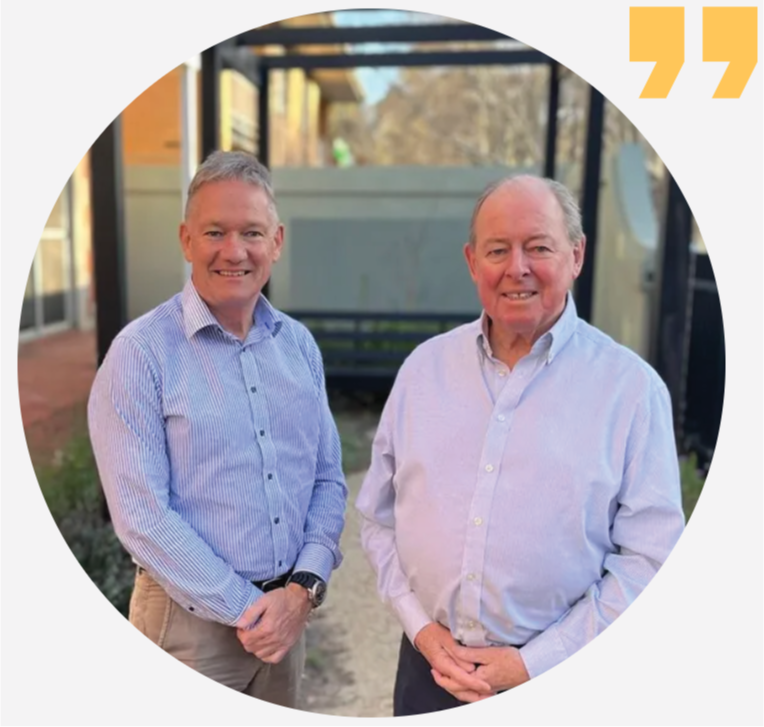
“They listened to our requirements and concerns and formulated a plan tailored to our specific circumstances. We feel they delivered a practical and detailed strategy that suits our needs and reflects our values and we are now working with Butler & Co to implement this.”
Chris Clarke
Partner, Clarke & Brownrigg Chartered Accountants Adelaide
CFO-ONE ADVISORS
“It took us a couple of months to really get clicking, and then around months three or four, we really started to see a huge return on investment which was fantastic.”
Mike Urness, CEO, CFO-One Advisors
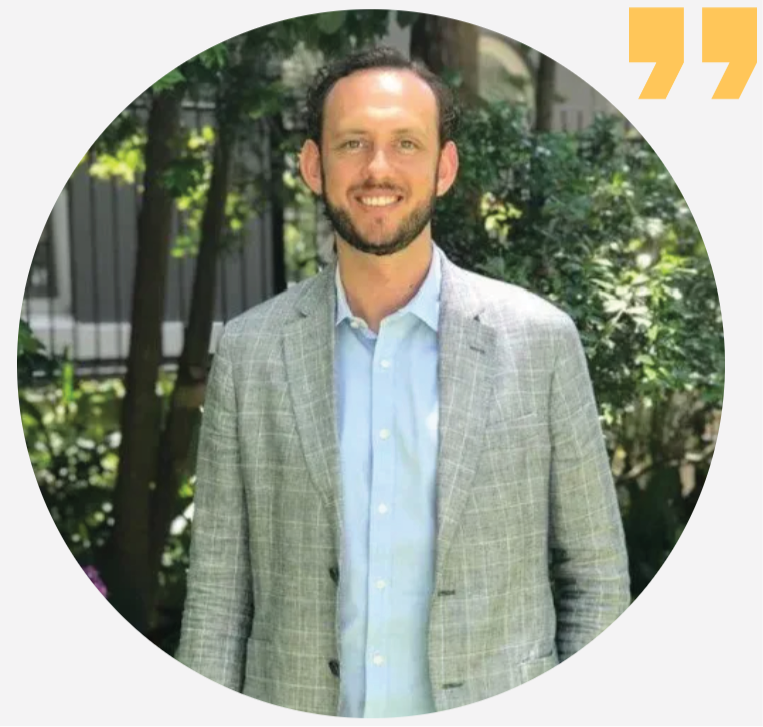
“Wow very promising stats actually…Can’t wait to ramp this up next year given the high enquiry to click through rate and high organic search rate (with no SEO!)”
James Livingston
Founder & Partner,
Arc Medical Accountants
PROPERTY FRONTLINE
"What a positive experience it was working with Trent. What I particularly liked was the mix of tools and feedback that helped me connect with clients in a systemised and targeted way, which saved me so much time."
Debra Beck-Mewing, Founder & CEO, Property Frontline

“Working with Butler & Co has been such a positive experience, helping me develop a suitable marketing strategy and generate high quality leads. Butler & Co are very professional and have a very strategic approach with lead generating. We’ve achieved outstanding results and through my experience, I can honestly recommend Butler & Co and the services 100%.”
Maryanne Drosos
Founder & Director,
Blue Diamond Recruitment
B2B LEADS
“Being a lead gen and marketing guy, I thought my sales process was down pat to be honest...
He [Trent] showed me his methods of conducting sales calls and strategy sessions, which turned out to be way more effective."
Ryan Caswell, Founder, B2B Leads

“I'm so grateful for the support and guidance that Butler & Co’s business coaching has provided me thus far. Without them, I’m not sure if I would have continued in business. I'm now excited for the future and for what's next – we’re only just getting started!”
Kristie Oldfield
Founder & Director,
Parabroker.au
ACHIEVE MARKET LEADING STATUS WITHOUT:

The hassle and risk of taking on a business partner or prematurely hiring and managing a full-time marketing, finance or operations person.
Replacing your existing team members.
Throwing away what is already working.
Schedule a call to see if our approach can help take your business to #1 in your market.
ACHIEVE MARKET LEADING STATUS WITHOUT:
The hassle and risk of taking on a business partner or prematurely hiring and managing a full-time marketing, finance or operations person.
Replacing your existing team members.
Throwing away what is already working.
Schedule a call to see if our approach can help take your business to #1 in your market.
COACHING WILL PAY OFF OVER THE LONG TERM - AND WE GUARANTEE RESULTS.
'Win/Win' is a core value here at Butler & Co Advisory, which is why we offer a return on investment guarantee.
Investment presumes that there will be a return. Otherwise, it’s just an expense.
If you qualify – and do the work – we offer a guarantee:
After 17 weeks of coaching, you will agree that coaching has paid for itself - or we will work with you at no charge until that is true.
This drives us to do great work and ensure we're only commencing relationships with those who we're sure will see commercially positive outcomes.
Our latest articles to help you grow your business

From Business Owner to Business Leader: The Three Responsibilities That Matter Most
If your business has grown but still depends on you for every important decision, the issue may not be your team.
It may be that your leadership role has changed and no one ever trained you for the next stage.
Most business owners start because they are good at something. They are good accountants, engineers, consultants, advisers, recruiters, health professionals, buyers agents, or specialist service providers.
That ability gets the business started.
But it is not enough to scale it.
At some point, the question changes from:
“How do I deliver great work?”
To:
“How do I build a business that delivers great work without everything depending on me?”
At Butler & Co Advisory, we often look at leadership through three practical responsibilities:
Creating Vision
Creating Alignment
Driving Execution
If one of these is weak, growth becomes harder than it needs to be.
1. Creating Vision
Leadership starts with direction.
Your team needs to understand:
Where the business is going
What success looks like
What matters most right now
Which opportunities fit
Which opportunities do not
Vision is not just having goals.
A goal might be:
“We want to grow revenue by 20% this year.”
A clearer vision might be:
“We are building a premium advisory firm that works with fewer, better-fit clients, delivers deeper value, and improves profitability without overloading the team.”
That gives people context.
It helps them make better decisions without needing you in every conversation.
2. Creating Alignment
Vision matters, but vision alone is not enough.
Many business owners think communication equals alignment.
It does not.
You can say something once and think it is clear. Your team can hear it, nod, and still interpret it differently.
Misalignment shows up when:
Sales promises things delivery cannot fulfil
Different people apply different standards
Managers interpret priorities differently
Clients receive inconsistent experiences
You keep stepping in to clarify or fix things
No one may be doing anything wrong.
But the business still feels harder than it should.
That is often an alignment problem.
Alignment is built through clarity, dialogue, and inspiration.
Clarity means people know what matters.
Dialogue means alignment is a conversation, not a broadcast.
Inspiration means people understand why the work matters, not just what needs to be done.
When those three things are missing, the owner becomes the translator for the whole business.
3. Driving Execution
Execution is where strategy becomes reality.
But execution does not mean micromanaging people, chasing every task, or personally pushing every project forward.
Real execution means creating an organisation that can consistently deliver results.
That requires:
Clear priorities
Accountable owners
Regular meetings
Simple scoreboards
Follow-through
Support when people get stuck
In many small businesses, execution depends on the owner’s energy.
The owner remembers the priorities, follows up, checks the details, and pushes things over the line.
That works for a while.
But as the team grows, it becomes exhausting.
The better goal is to create a rhythm where execution becomes normal.
Your role changes from being the person who drives every outcome to the person who creates the environment where outcomes are delivered consistently.
Why Business Owners Become the Bottleneck
As the business grows, owners often spend most of their time solving problems, approving decisions, answering questions, reviewing work, handling clients, and putting out fires.
Because they are so busy executing, they spend less time creating vision and alignment.
But vision and alignment are what reduce the burden of execution.
Without clear vision, the team needs you for direction.
Without alignment, the team needs you for interpretation.
Without execution rhythms, the team needs you for momentum.
So the owner becomes the glue.
At first, that can feel useful.
Eventually, it becomes the constraint.
This is why many established business owners say:
“I have a team, but everything still comes back to me.”
That is not always a people problem.
It is often a leadership design problem.
The Shift From Owner to Leader
In the early stage, the owner is often the main producer.
You win the work. You deliver the work. You manage the clients. You solve the problems. You make the decisions.
That is normal.
But in a growth-stage business, your role must evolve.
You move from doing the work to leading the people doing the work.
From solving problems to building capability.
From making every decision to developing decision-makers.
From delivering value personally to building an organisation that delivers value consistently.
That is the transition from business owner to business leader.
And it is not always comfortable.
You may need to stop relying on being the best technician in the room as your main source of value.
You may need to let others solve problems differently from how you would solve them.
You may need to spend more time repeating priorities, developing people, and creating accountability.
But that is the work of leadership.
Three Questions to Ask This Week
Choose one area of the business where too much still depends on you.
Then ask:
Is the direction clear?
Are expectations aligned?
Is there a rhythm for execution?
Then ask one more question:
“Am I solving the problem, or building the capability to prevent it next time?”
That question matters.
Because if you solve every problem yourself, the business does not get stronger. It gets more dependent on you.
Final Thought
Many business owners respond to complexity by working harder.
They start earlier. Finish later. Answer more questions. Attend more meetings. Carry more decisions.
But effort alone does not scale.
Leadership does.
The businesses that grow successfully are not always led by the owners who work the hardest.
They are led by owners who create clear vision, strong alignment, and consistent execution.
That is what turns a business from a founder-dependent operation into a more capable organisation.
If your business has reached the point where everything still seems to come back to you, it may not be a systems problem alone. It may be a leadership capability problem.
If you would like an objective thinking partner to help you develop those capabilities and build a business that becomes less dependent on you, I would be happy to help.
You can book an initial 15-minute call here: https://www.butleradvisory.com.au/time-with-trent

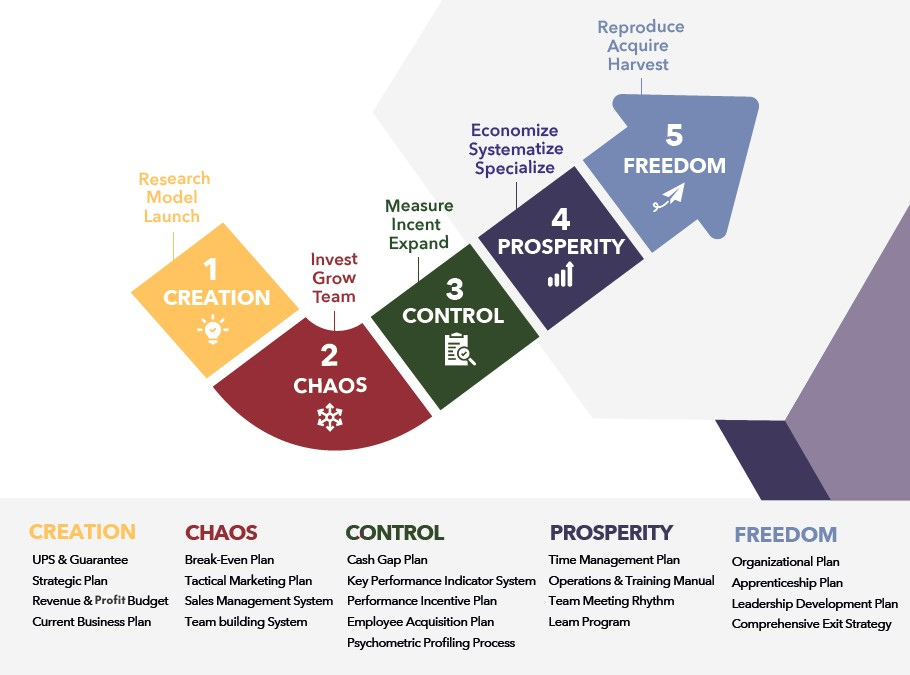
Subscribe To Watch Our Free Methodology Presentation: Learn Our Proven 5-Step System For Transforming Your Business Into A Firm That Runs Smoothly, Profitably and (mostly) without You.
Confirm Your Details To Continue

Subscribe To Watch Our Free Methodology Presentation: Learn Our Proven 5-Step System For Transforming Your Business Into A Firm That Runs Smoothly, Profitably and (mostly) without You.
Confirm Your Details To Continue
Schedule a call to see if our approach can help take your business to #1 in your market.
No pie-in-the-sky. No generic ideas.
No hard sell.
Just straight-forward analysis of your approach to marketing and sales, team-building skills, gross and net profitability, and business transfer readiness.