
BLOG
BLOG

Why Reading More Books Isn’t Fixing Your Business
If you’re a business owner, chances are you’ve read The E-Myth, Profit First, a stack of leadership books, and more marketing advice than you care to admit.
You know the concepts.
You agree with the ideas.
And yet… the business still feels harder than it should.
Revenue might be okay, but inconsistent.
Your days are full, but progress feels slow.
You’re smarter than ever, but not freer.
That gap is frustrating. And it’s not because you haven’t learned enough.
The uncomfortable truth?
Information isn’t the problem. Execution is.
The Illusion of Progress: Why Learning Feels Like Action
Books Create Momentum - But Not Movement
Reading a good business book feels productive for a reason. It gives you clarity. It puts language to problems you’ve been feeling for years. It creates optimism.
For a moment, everything makes sense.
But clarity isn’t the same as change.
That rush of “this is what I need to do” is a dopamine hit. Implementation, on the other hand, is slower, messier, and uncomfortable. It requires decisions, trade-offs, and discipline - not just agreement.
When Insight Replaces Responsibility
Here’s where things quietly stall.
Instead of making the hard decision, you read another chapter.
Instead of committing to one approach, you look for a better one.
Instead of acting, you prepare.
Without realising it, learning becomes a socially acceptable way to delay action.
Understanding replaces responsibility.
And the business stays the same.
Knowledge Isn’t the Constraint, Behavior Is
Most Business Owners Already Know What to Do
In my experience, most owners don’t have a knowledge gap. They already know the fundamentals:
Delegate more instead of doing everything yourself
Focus on high-value work, not busywork
Build repeatable systems
Improve cash flow visibility
Market consistently, not sporadically
None of that is new. You’ve probably read it dozens of times.
Why Knowing Isn’t the Same as Doing
So why doesn’t it happen?
Because execution runs into very human obstacles:
Fear of letting go
Overwhelm from too many priorities
Perfectionism disguised as “standards”
No clear structure for follow-through
Most importantly, there’s no forcing function. Nothing that turns good intentions into weekly action.
The Cost of Consuming Without Implementing
Information Overload Creates Paralysis
Every book adds another idea. Another framework. Another “best way”.
Soon, you’re juggling too many options and no clear next step. Conflicting advice doesn’t create confidence - it creates hesitation.
You hesitate.
You delay.
You do nothing.
Scattered Focus Kills Execution
This often shows up as:
Jumping from tactic to tactic
Starting initiatives that never get finished
Making progress that doesn’t compound
Activity increases, but momentum doesn’t.
Businesses Don’t Grow From Ideas - They Grow From Decisions (Followed Up With Actions)
Growth Requires Commitment, Not More Concepts
Real growth happens when you commit to one or two priorities and see them through.
That means saying no to good ideas.
It means accepting trade-offs.
It means abandoning “best practice” in favour of what actually fits your business.
Clarity doesn’t come from more input. It comes from decision-making.
Why Strategy Without Accountability Fades
Most strategies fail quietly.
Not because they’re wrong - but because no one holds the line once things get busy. Within weeks, urgency crowds out importance and the old habits return.
Without structure and accountability, even great plans dissolve.
The Missing Ingredient: Implementation With Accountability
Why External Perspective Changes Behaviour
This is where things shift.
An external perspective does three critical things:
Challenges assumptions you no longer question
Narrows focus to what actually matters now
Holds the line when execution gets uncomfortable
Not to tell you what to do - but to ensure what you decide actually happens.
From Learning to Doing: The Real Shift
Progress follows a simple chain:
Ideas → Decisions
Decisions → Plans
Plans → Weekly actions
Actions → Results
Most businesses break the chain somewhere in the middle.
Accountability is what keeps it intact.
A Better Question Than “What Should I Read Next?”
Instead of asking for more information, try this.
Ask: “What Am I Avoiding Implementing?”
Be honest.
Is it delegation?
Financial discipline?
Marketing consistency?
Letting go of low-value work that keeps you busy but stuck?
That answer matters more than any book recommendation.
Ask: “What Would Change If I Actually Followed Through?”
Imagine it clearly:
More time in your week
Greater confidence in decisions
Predictable revenue and cash flow
Momentum instead of mental load
That’s not a knowledge upgrade. That’s an execution upgrade.
One Simple Action You Can Take This Week
Before you read anything else, do this:
Write down one idea you’ve learned in the last 12 months
Ask, “Have I fully implemented this?”
If not, define one specific action you’ll complete this week
No new books. No new frameworks. Just follow-through.
Stop Consuming. Start Building.
Books are valuable. They can support growth and sharpen thinking.
But businesses don’t change because owners learn something new.
They change because owners do something different.
Real progress begins when insight meets structure, discipline, and accountability.
If you’re ready to move from knowing to doing - and want support implementing what already makes sense - that’s where business coaching becomes powerful.
Your business should reward your effort, not just consume it.
And that starts with building, not consuming.

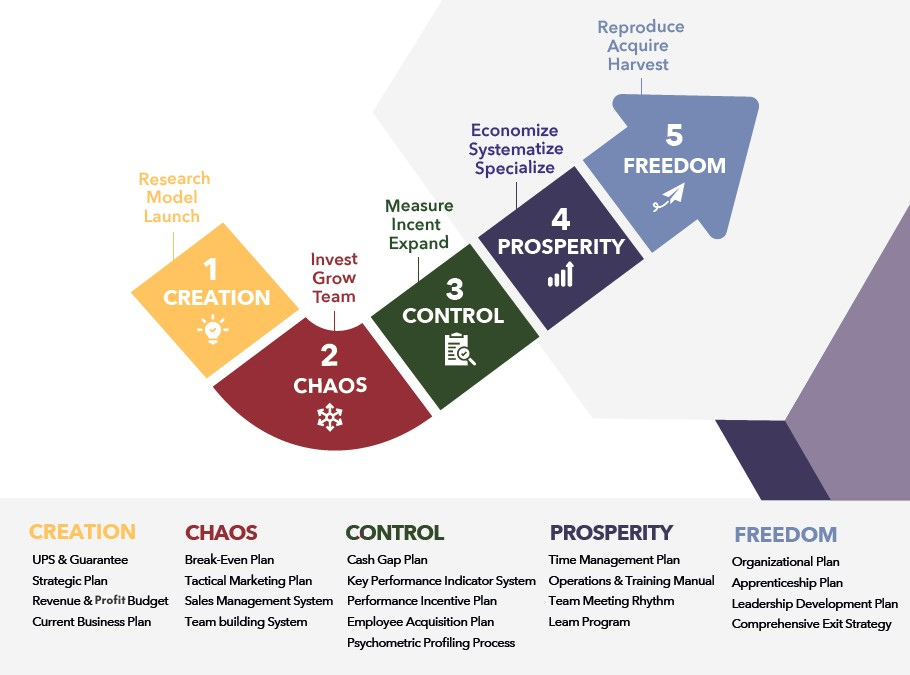
Free Methodology Presentation: Learn Our Proven 5-Step System For Transforming Your Business Into A Firm That Runs Smoothly, Profitably and (mostly) Without You
Free Methodology Presentation: Learn Our Proven 5-Step System For Transforming Your Business Into A Firm That Runs Smoothly, Profitably and (mostly) Without You.
Confirm Your Details To Continue
Confirm Your Details To Continue
Schedule a call to see if our approach can help take your business to #1 in your market.
No pie-in-the-sky. No generic ideas.
No hard sell.
Just straight-forward analysis of your approach to marketing and sales, team-building skills, gross and net profitability, and business transfer readiness.