
BLOG
BLOG

The 7 Levers of Profit Growth Every Business Owner Must Master
When revenue slows down, most business owners default to one solution:
“We need more leads.”
It sounds logical. It feels productive. And because leads are visible and measurable, it feels like progress.
But in many cases, chasing more leads is exactly what keeps a business stuck.
Not because leads don’t matter. They do.
But more leads into a business with weak conversion, poor qualification, inconsistent delivery, thin margins, or unclear pricing doesn’t create more profit.
It creates more pressure.
More enquiries. More quotes. More follow-up. More work for the team. More noise in the system.
And if the system behind those leads isn’t strong enough, more demand simply exposes the cracks faster.
This is the trap: trying to grow by pulling one lever harder.
Profit growth rarely comes from one big move. It usually comes from improving the whole system.
There are seven key levers that drive profit in any business. When you understand them properly, you stop relying on hope, hustle, or one-dimensional marketing activity.
You start building growth with greater control.
Let’s walk through them.
1. Lead Generation - The Starting Point
Leads matter.
They are the entry point into your business.
But this is where many owners get caught in the “more leads will fix it” trap.
The issue is not always lead volume. Often, it is lead quality.
More enquiries are not useful if they are the wrong enquiries.
This is where it breaks.
The business spends more on marketing, the team gets busier, more people enter the pipeline - but revenue barely improves and profit does not move.
Why?
Because the leads are poorly matched.
They may not have the budget. They may not value what you do. They may not be ready to buy. They may take up time, ask for discounts, delay decisions, or distract your team from better opportunities.
The shift here is simple but powerful:
Define what a good lead actually looks like
Tighten your targeting
Focus on fit, not just volume
Measure lead quality, not just enquiry numbers
A business can double its lead flow and still not become more profitable if those leads are feeding a system that is not ready for them.
More leads are useful only when the rest of the business can convert, serve, retain, and profit from them.
2. Sales Conversion - Turning Prospects into Customers
This is where a lot of profit is quietly won or lost.
Many businesses think they have a sales process.
What they actually have is a series of conversations that depend on who is having them that day.
That works for a while, especially when the owner is involved in every sale.
But it does not scale well.
Without a clear sales process, conversion becomes inconsistent. Follow-ups gets missed. Qualification is weak. The business spends too much time with people who were never likely to buy in the first place.
This is what is really happening:
The business doesn’t just have a sales problem. It has a filtering problem.
Strong sales is not about convincing the wrong people to buy. It is about understanding the right people properly and helping them make a clear decision.
The opportunity is to:
Build a simple, repeatable sales process
Ask better questions upfront
Qualify prospects properly
Get clear on who you should not work with
Follow up consistently and professionally
You don’t always need more leads.
Sometimes you need to stop wasting the ones you already have.
And sometimes, you need to stop pursuing the ones that were never a good fit.
3. Customer Retention - Keeping the Right Clients Longer
Customer retention is one of the most underrated profit levers.
It is also one of the easiest to overlook.
Many businesses do good work, but still lose clients or fail to generate repeat business because there is no structure around the client experience.
This is common, and it is easy to fall into.
The sale happens. The work begins. The team gets busy. Communication becomes reactive. Delivery quality depends too heavily on individuals. The client journey is assumed rather than designed.
The result?
You are constantly replacing clients instead of building on the relationships you have already earned.
In many cases, the business does not have a marketing problem. It has a retention problem.
A few simple shifts can make a meaningful difference:
Map the full client journey
Set expectations clearly from the beginning
Build in proactive communication
Create consistency in delivery
Identify natural next steps before the engagement ends
It is generally easier and cheaper to keep a good client than to replace one.
When retention improves, pressure on marketing reduces.
The business does not need to constantly start again.
4. Increasing Order Value - More Value Per Transaction
Many businesses underprice.
Not always because their market demands it.
Often because the owner is emotionally attached to avoiding rejection.
There is a fear of losing the sale. So prices stay conservative. Offers stay small. Scope expands quietly. The team delivers more than was agreed. And the business ends up working harder than the margin justifies.
This is where growth becomes exhausting.
More clients. More jobs. More delivery pressure.
But not enough profit.
Where this often shows up:
Clients buying the minimum
Too much custom work
High effort per job
Weak packaging
Thin margins
Owners feeling uncomfortable charging properly
The opportunity is to rethink how your work is packaged, priced, and positioned.
That means:
Selling outcomes, not just services
Creating offers that solve a complete problem
Making value easier for the client to understand
Introducing natural upsell or cross-sell opportunities
Pricing based on value, complexity, and delivery effort
The aim is not to charge more for the sake of it.
The aim is to make sure the business is being paid properly for the value it creates.
Same number of clients. Better value per transaction. Stronger profit potential.
That is a cleaner path to growth than simply adding more volume.
5. Transactions per Customer - Driving Repeat Business
If you do not have a system for repeat business, you are constantly starting from zero.
Many businesses rely on repeat work happening naturally.
Sometimes it does.
Often, it doesn’t.
Not because clients are unhappy. Not because they would not buy again. But because no one has created a structured reason, reminder, or pathway for them to do so.
Once the job is done, the relationship fades.
No follow-up. No reactivation. No ongoing nurture. No next-step offer. No system to stay front of mind.
This is one of the quietest leaks in a business.
The fix does not need to be complicated.
It may include:
A simple follow-up cadence
Reactivation campaigns for past clients
Scheduled check-ins
Ongoing service models where appropriate
Education that keeps clients engaged
Clear next-step offers
When this lever is working, revenue starts to compound instead of reset.
You are no longer depending only on new customers.
You are building more value from the relationships you have already created.
6. Gross Margin Improvement - Protecting Profit
This is where “busy but broke” lives.
Revenue can grow while profit goes backwards.
It happens more often than many owners realise.
The business looks busy. The team is stretched. The pipeline is active. Sales may even be increasing.
But cash still feels tight.
This is where owners often misread the problem.
They think they need more revenue.
But the real issue may be that the business is not keeping enough of the revenue it already earns.
Gross margin problems usually come from a lack of clarity around the true cost of delivery.
Where this breaks down:
Pricing does not reflect effort
Scope creep is not managed
Labour costs are underestimated
Delivery takes longer than expected
Discounts are given too easily
Costs increase quietly over time
This lever requires discipline.
You need to understand:
What it actually costs to deliver your product or service
Which clients, jobs, or services are most profitable
Where margin is being lost
Where the team is doing unpaid work
Where scope needs to be protected
Growth without margin discipline creates stress.
Growth with margin discipline creates capacity.
There is a big difference.
7. Reducing Fixed Expenses - Streamlining the Base
This is not about cutting costs blindly.
A business cannot shrink its way to greatness.
But it can absolutely improve profit by removing waste.
Over time, most businesses accumulate complexity.
Subscriptions. Tools. Software. Processes. Legacy decisions. Old habits.
Individually, they may not seem significant.
Together, they quietly erode profit and focus.
This is where a simple review can be powerful.
Ask:
What are we paying for that we no longer need?
What tools are duplicated?
Which roles or responsibilities are unclear?
What could be automated?
What could be outsourced?
What activity no longer serves the business?
The goal is not to make the business cheap.
The goal is to make it clean.
Every unnecessary dollar removed from fixed expenses improves the base the business is operating from.
And every unnecessary complexity removed gives the team more room to focus on what matters.
The Compounding Effect - Where This Gets Powerful
Here is the part many business owners miss.
They try to make one lever do all the work.
Usually lead generation.
But that is a heavy burden to place on one part of the business.
If conversion is weak, more leads leak.
If retention is weak, more clients leave.
If pricing is weak, more sales create more strain.
If gross margins are weak, more revenue creates more stress.
If expenses are bloated, more gross profit gets absorbed before it reaches the bottom line.
This is why the seven levers matter.
You do not need to double one area to improve the business.
Often, smaller improvements across multiple areas create a far stronger result.
For example:
A slightly better-quality lead
A slightly stronger conversion process
A slightly higher average order value
A slightly better retention rate
A slightly cleaner margin
A slightly more efficient cost base
Individually, those improvements may not feel dramatic.
Together, they compound.
That is the difference between pushing harder and building better.
Pushing harder says:
“We need more leads.”
Building better asks:
“Where is the system leaking profit?”
That is a much better question.
Because if you pour more leads into a leaking system, you do not solve the problem.
You just make the leak more expensive.
What This Means for You
You do not need to fix everything at once.
But you do need clarity.
If your revenue is growing but profit is not, one of these levers is likely underperforming.
If your team feels busy but the business is not improving, one of these levers may be creating unnecessary pressure.
If you are spending more on marketing but not seeing it flow through to the bottom line, the issue may not be lead generation at all.
Start by asking:
Where are we over-focused?
Where are we leaking value?
Which lever is creating the most pressure?
Which lever would create the greatest improvement if we fixed it?
Are we trying to solve a system problem with a marketing solution?
This is the shift.
Profit is not dependent on one thing.
You have options.
But first, you need to know which lever matters most right now.
Systems Over Shortcuts
Sustainable profit growth does not come from chasing one lever harder.
It comes from improving the system as a whole.
That is how a business moves from reactive to controlled.
Not overnight. Not perfectly. But deliberately.
Most owners do not need more noise.
They need clarity.
They need to know where the real constraint is.
If you’re pushing for growth but not seeing it flow through to profit, one of these seven levers is likely underperforming.
The question is: which one?
That is exactly what we work through in a complimentary 20-minute call.
We identify the 1-3 levers most likely to move the needle in your business and give you a clear direction on what to focus on next.
No pressure. No lock-in.
Just clarity on what matters.

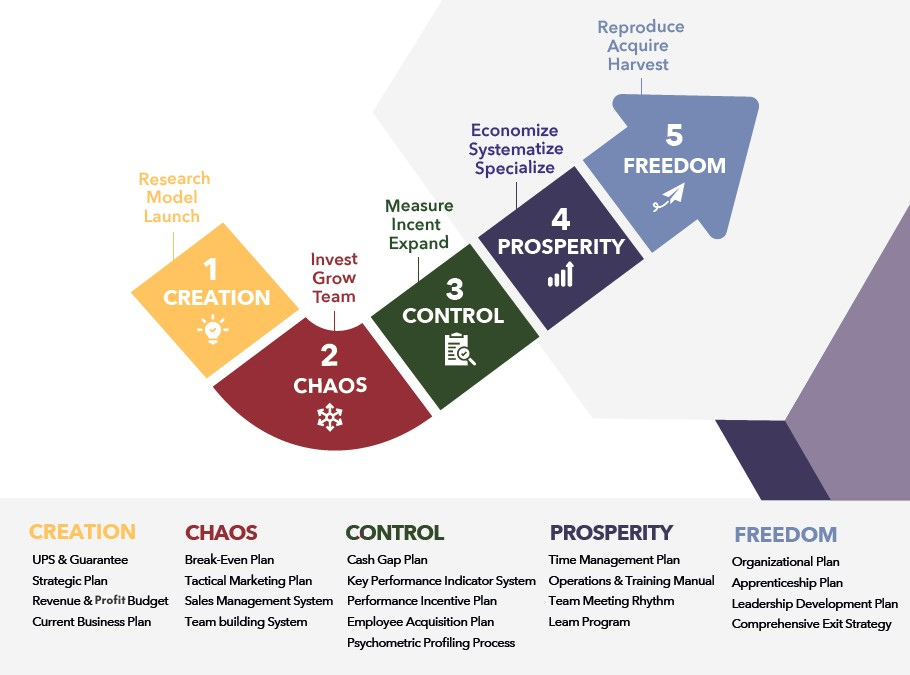
Free Methodology Presentation: Learn Our Proven 5-Step System For Transforming Your Business Into A Firm That Runs Smoothly, Profitably and (mostly) Without You
Free Methodology Presentation: Learn Our Proven 5-Step System For Transforming Your Business Into A Firm That Runs Smoothly, Profitably and (mostly) Without You.
Confirm Your Details To Continue
Confirm Your Details To Continue
Schedule a call to see if our approach can help take your business to #1 in your market.
No pie-in-the-sky. No generic ideas.
No hard sell.
Just straight-forward analysis of your approach to marketing and sales, team-building skills, gross and net profitability, and business transfer readiness.