
BLOG
BLOG

Seven Quiet Signs You’re Ready for Business Coaching (Even If You’re Doing ‘Fine’)
This time of year does something interesting to business owners.
The pace slows just enough to think. You start asking better questions.
Not “How do I survive?” - but “How do I make this year different?”
Many of the owners I speak with are doing fine on paper.
Revenue is there. The business works. From the outside, things look solid.
But underneath, something feels heavier than it should.
If that sounds familiar, here are seven quiet signs you may be ready for 1:1 business coaching, even if nothing is technically “wrong”.
1. Decisions Take Longer Than They Used To
You used to trust your gut. Now decisions linger.
Hiring. Pricing. What to say yes or no to.
You make the call, then replay it later.
That’s not weakness. It’s complexity.
As businesses grow, instinct alone stops scaling. What used to be simple now has more moving parts. Without a clear framework, every decision carries more mental weight than it should.
Clarity beats confidence every time.
2. You’re Busy, But the Leverage Has Dropped
You’re working hard. Maybe harder than ever.
But the return per hour feels lower.
More effort doesn’t equal more progress.
This usually means the owner is still rowing instead of steering. Too close to the engine room. Too involved in things that shouldn’t need you anymore.
Leverage isn’t about working less.
It’s about installing the right systems so effort compounds again.
3. Growth Has Made Things Heavier, Not Easier
Revenue has increased, but so has pressure.
More clients. More staff. More noise.
Cash moves, but predictability hasn’t improved.
This is common. And frustrating.
Growth without structure often creates weight before it creates freedom. When revenue, profit, and cash flow don’t behave the way you expect, it’s a sign the business has outgrown its current operating model.
That is a skills gap, not a failure.
4. You’re the Bottleneck (And You Know It)
You can see it now.
The team waits on you.
Quality flows through you.
Decisions default back to you.
Most founders build businesses this way and it’s how momentum is created early on. But at a certain point, awareness without a clear path forward becomes exhausting.
The next phase isn’t pushing the team harder.
It’s upgrading how the owner leads, decides, and lets go.
5. You Consume Content, But Nothing Changes
Books. Podcasts. Events. Notes everywhere.
Yet six months later, the business looks much the same.
Information isn’t the problem. Installation is.
Knowing what to do isn’t the same as doing it consistently. Like the gym, results don’t come from understanding technique; they come from following a simple program with structure, accountability and consistency.
Coaching turns insight into execution.
6. You Want the Business to Serve Your Life
Something shifts here.
Time matters more. Energy matters more.
Family, health, and headspace start influencing decisions.
You’re no longer interested in “bigger at any cost”. You want the business to support your life, not consume it.
That doesn’t happen by accident. It happens by design.
7. You’re Asking Better Questions
This is the quietest sign and the most important.
Questions like:
What actually matters now?
What should I stop doing?
Who do I need to become for this business to work better?
In my experience, this is when business coaching can work best.
Not when things are broken, but when the owner is ready to think differently.
The Common Thread
None of these signs mean you’ve failed.
They point to one simple truth:
If the owner wants a better business, first the business needs a better owner.
Not a different personality.
Not more hustle.
Just the next set of skills.
This is an apprenticeship in business: installing what is needed now, not what worked five years ago.
What to Do Next
If this resonated, keep it simple:
Get honest about where the friction is
Identify the next one or two skills that unlock leverage
Install them with structure and accountability
No hype. No pressure. Just clarity.
If you want, consider watching our business coaching methodology presentation below.
If it makes sense, we move forward to the next step. If not, you’ll still gain clarity on what needs to change in order to make 2026 different.
Either way, this year doesn’t need more effort.
It needs better structure, lighter load, and clearer decisions.

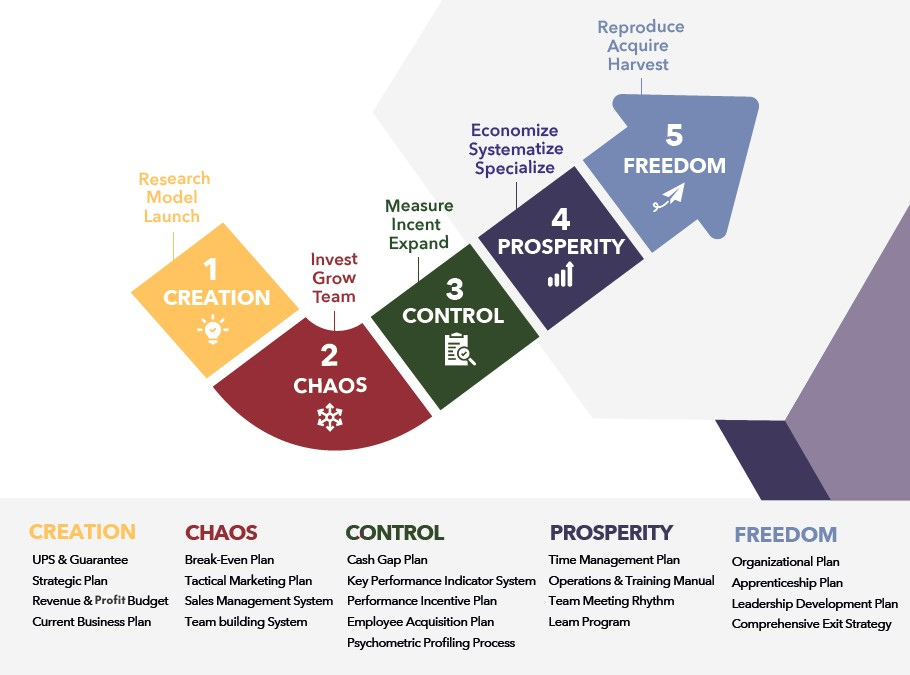
Free Methodology Presentation: Learn Our Proven 5-Step System For Transforming Your Business Into A Firm That Runs Smoothly, Profitably and (mostly) Without You
Free Methodology Presentation: Learn Our Proven 5-Step System For Transforming Your Business Into A Firm That Runs Smoothly, Profitably and (mostly) Without You.
Confirm Your Details To Continue
Confirm Your Details To Continue
Schedule a call to see if our approach can help take your business to #1 in your market.
No pie-in-the-sky. No generic ideas.
No hard sell.
Just straight-forward analysis of your approach to marketing and sales, team-building skills, gross and net profitability, and business transfer readiness.