
BLOG
BLOG

Master Yourself First: The Hidden Leadership Skill Every Business Owner Needs
Most business owners do not come looking for help with “leadership”.
They usually come looking for help with more practical business problems: time management, delegation, hiring, profitability, cash flow, systems, team performance, or more leads.
And to be clear, those are all real business challenges.
However, after working with 150+ business owners over the years, I have noticed something important.
Many problems that first appear to be operational are actually leadership problems in disguise.
The owner is working too many hours. The team keeps bringing decisions back to them. Delegation is not sticking. Growth feels heavier than expected. The business may be more successful than ever, yet the owner feels more trapped than they did when the business was smaller.
On the surface, these look like system, staff, or structure issues.
Often, they are signs that the business has grown beyond the owner’s current leadership approach.
That does not mean the owner has failed. In many cases, it means the opposite. The business has grown because the owner is capable, committed, and good at what they do.
But the uncomfortable truth is this:
In many cases, a business eventually starts to reflect the limits of its leadership.
The next stage of growth rarely requires the owner to simply work harder.
It usually requires the owner to lead differently.
Why Technical Expertise Stops Being Enough
Most successful professional service business owners did not start out as business owners.
They started as experts.
Accountants. Engineers. Consultants. Architects. Financial advisers. Recruiters. Buyers agents. Allied health professionals. Specialist service providers.
They built their businesses because they were good at the work.
Clients trusted them. Their reputation grew. Their technical ability created demand. Their personal standards helped build the early success of the business.
Then the business grew.
More clients arrived. More staff were hired. More decisions had to be made. More complexity entered the business.
At that point, the skills that built the business are no longer enough to continue growing it.
Being technically excellent and being an effective business leader are not the same thing.
One is about delivering great work.
The other is about building an organisation that can deliver great work consistently without everything depending on the owner.
For example, a consulting firm with three staff can often run on the owner’s memory, personal standards, and direct involvement. At twelve staff, that same approach can start creating confusion, rework, inconsistent decisions, and decision fatigue.
Nothing is necessarily “wrong” with the business.
It has simply reached a stage where a different level of leadership is required.
Most professionals were never formally taught how to:
Lead people
Build systems
Develop managers
Create accountability
Hold difficult conversations
Make strategic decisions under pressure
As a result, many owners try to solve leadership problems with technical solutions.
They work harder. They check more work. They answer more questions. They stay closer to every decision.
But that often makes the dependency worse.
The Hidden Bottleneck in Growing Businesses
Growth creates opportunity.
It also creates complexity.
More clients can mean more revenue, but also more delivery pressure.
More staff can mean more capacity, but also more communication, training, and management.
More opportunity can mean more choice, but also more decisions.
Growth does not remove problems. It changes the nature of them.
This is why many business owners reach a stage where they have achieved what they once wanted, yet still feel stuck.
Perhaps:
Staff constantly seek your approval.
You feel involved in every significant decision.
You struggle to switch off.
Delegation feels risky.
You spend more time firefighting than leading.
The business cannot seem to function properly without you.
At this point, many owners conclude they need better systems.
And they probably do.
But systems alone rarely solve the entire problem.
In many growing businesses, the owner unintentionally becomes the bottleneck.
Not because they are incapable. Not because they are doing something wrong. But because the business has outgrown the leadership habits that got it to this point.
What worked at three staff often breaks at ten.
What worked at ten may not work at twenty.
The question is not, “What is wrong with me?”
A better question is:
What does the next stage of the business now require from me as a leader?
That question changes everything.
What Personal Mastery Actually Means
The term “personal mastery” can create the wrong impression.
It can sound like self-help.
It can sound soft.
It can sound disconnected from commercial outcomes.
But in business, personal mastery is not about positive thinking, motivation, vision boards, or perfect morning routines.
Personal mastery is a business capability.
It is the ability to lead yourself effectively so you can lead others effectively.
In practical terms, it includes:
Self-awareness
Self-discipline
Emotional regulation
Clear decision-making
Accountability
Intentional leadership
The best leaders are not perfect.
They are simply more aware of how they think, how they react under pressure, and how their behaviour affects the people around them.
That matters because leaders set the tone.
The owner’s behaviour influences the culture.
The owner’s standards influence the team’s standards.
The owner’s clarity influences the quality of decisions.
The owner’s consistency influences the level of trust inside the business.
In many cases, a business will struggle to become more disciplined, accountable, or strategic than the person leading it.
That is why self-mastery is not separate from business mastery.
It is part of it.
Five Ways Personal Mastery Shows Up in Business
1. Better Decision Making
Every business owner makes hundreds of decisions every month.
Some are small. Some are significant. Some are made carefully. Others are made quickly in the middle of a busy week.
Over time, the quality of those decisions compounds.
Leaders with strong personal mastery tend to be less reactive. They create space to think. They distinguish between what is urgent and what is truly important.
They are more likely to ask:
What problem am I actually solving?
What outcome do I want?
What information do I need?
What are the likely consequences of this decision?
Is this aligned with the direction of the business?
This does not mean they always get it right.
It means they make decisions with greater clarity and less emotional noise.
Practical step: This week, identify one decision you have been delaying. Write down the real decision, the options available, the likely consequences, and the next best step. Often, clarity improves once the decision is taken out of your head and put onto paper.
2. Better Delegation
Most delegation problems are not only system problems.
They are often trust, control, or clarity problems.
Many owners know they should delegate more. The challenge is not usually intellectual. It is emotional and practical.
They worry the work will not be done properly. They worry the client experience will suffer. They worry it will take longer to explain the task than to do it themselves.
Sometimes those concerns are valid.
But if the owner keeps taking work back, the team never builds capability.
Personal mastery helps leaders separate legitimate risk from discomfort. It helps them provide clearer expectations, better support, and stronger accountability without micromanaging.
Practical step: Identify one recurring decision your team still brings to you. Create a simple decision rule they can use without you. For example: “If the client request is under two hours of work and within scope, approve it. If it changes the fee, bring it to me.”
Delegation improves when people understand both the task and the boundaries.
3. Better Leadership Conversations
Few business owners enjoy difficult conversations.
Whether it involves giving feedback, addressing poor performance, challenging behaviour, or resetting expectations, these conversations are easy to delay.
But delayed conversations usually become bigger problems.
A small performance issue becomes a cultural issue.
A minor frustration becomes resentment.
A lack of clarity becomes a repeated mistake.
Leaders with stronger personal mastery are more willing to be direct, calm, and respectful. They do not avoid the conversation simply because it feels uncomfortable.
They understand that clear is kind.
Practical step: Think of one conversation you have been avoiding. Before having it, write down three things: the behaviour or issue, the impact on the business or team, and the standard or expectation moving forward. This keeps the conversation focused and reduces the risk of making it personal.
4. Greater Consistency
Teams do not only follow what leaders say.
They follow what leaders consistently do.
If expectations change from week to week, confusion follows.
If standards are enforced one month and ignored the next, accountability weakens.
If the owner constantly changes direction, the team learns to wait rather than act.
Personal mastery helps leaders become more consistent in their actions, communication, and decision-making.
Consistency creates trust.
Trust improves performance.
This does not mean being rigid. It means being clear enough that people know what matters, what is expected, and how decisions are made.
Practical step: Choose one standard in the business that needs to become more consistent. It might be response times, meeting attendance, client communication, quality control, or internal reporting. Communicate the standard clearly, then review it weekly until it becomes normal.
5. Increased Capacity for Growth
Growth creates uncertainty.
There will always be new challenges, new risks, new staff issues, new opportunities, and new decisions.
The owners who grow successfully are not always the smartest or most technically gifted.
Often, they are the ones who increase their capacity to handle complexity without becoming overwhelmed by it.
They learn to pause before reacting.
They build stronger people around them.
They ask better questions.
They work on the business, not just in it.
They become more comfortable leading through uncertainty.
That is not luck.
That is leadership development.
Practical step: At the end of each week, ask yourself: “What kept pulling me back into the weeds this week?” Then ask: “Is this a people issue, a system issue, a communication issue, or a leadership issue?” The answer will help you identify where to focus next.
The Question Every Business Owner Must Ask
At some point, every owner must be willing to ask a difficult but useful question:
Is the business the constraint, or am I?
This is not about blame.
It is about leverage.
The purpose of the question is not to criticise yourself. It is to understand where the next improvement needs to come from.
Consider:
What problems keep repeating?
Where am I still the bottleneck?
What decisions am I holding onto unnecessarily?
What conversations am I avoiding?
What standards have I allowed to become unclear?
What leadership capability does the next stage of growth require?
What skills have I not yet developed?
Most business owners are good at identifying operational problems.
Far fewer take the time to identify their own leadership development opportunities.
Yet that is often where the greatest leverage exists.
If the same problem keeps returning, the issue may not be the surface-level problem.
It may be the way the business is being led, managed, or reinforced.
That is not a failure.
It is information.
One of the Highest-Leverage Investments Most Business Owners Overlook
Business owners often invest in marketing, software, staff, technology, training, consultants, and new systems.
All of those things can matter.
But one of the highest-leverage investments is often the owner’s own leadership capability.
Because better awareness leads to better choices.
Better choices lead to better results.
Every improvement in your leadership can influence:
The quality of your decisions
The performance of your team
The strength of your culture
The effectiveness of your systems
The profitability of your business
The amount of dependency the business has on you
In many cases, improving the business starts with improving the way the owner leads the business.
Not because the owner is the problem.
Because the owner is often the point of greatest leverage.
A Practical Exercise You Can Do This Week
Take ten minutes this week and answer this question:
What is the one leadership capability that would make the biggest difference to my business over the next 12 months?
It might be:
Delegation
Accountability conversations
Strategic thinking
Time management
Communication
Hiring
Decision-making
Financial discipline
Developing leaders inside the team
Choose one.
Then answer these three questions:
Where is this currently showing up as a constraint in the business?
What would improve if I became stronger in this area?
What is one small action I can take this week to start improving it?
For example:
If the capability is delegation, your action might be to document one recurring task and hand it to a team member with clear expectations.
If the capability is accountability, your action might be to introduce a simple weekly scorecard.
If the capability is communication, your action might be to have one clear conversation you have been avoiding.
Most owners have a growth plan for the business.
Far fewer have a growth plan for themselves.
Yet the two are closely connected.
The Business You Want Requires a Different Version of You
Most business owners believe they need a better business.
Often, they also need to become the leader capable of building it.
The goal is not simply to grow revenue, hire more people, or work fewer hours.
The goal is to build an organisation that can perform without depending entirely on you.
That requires systems.
It requires strategy.
It requires the right people.
But it also requires leadership growth.
Every stage of business growth requires a corresponding stage of personal growth.
The business you want may already be possible.
The question is whether you are developing the leadership capability required to create it.
Because business mastery begins with self-mastery.
If you are unsure whether your current constraint is strategy, systems, people, or leadership, a useful first step is to step back and diagnose where the business is really getting stuck.
Sometimes the biggest breakthrough is not found in a new strategy.
It is found in becoming the leader your business now requires.
The challenge for many business owners is that it's difficult to see your own blind spots while you're inside the business every day.
If you'd like an objective perspective on where your business is today and what may be limiting its next stage of growth, book a complimentary 15-minute call. Together we'll explore your current challenges, opportunities, and whether coaching is the right fit.
Book a time here: https://www.butleradvisory.com.au/time-with-trent

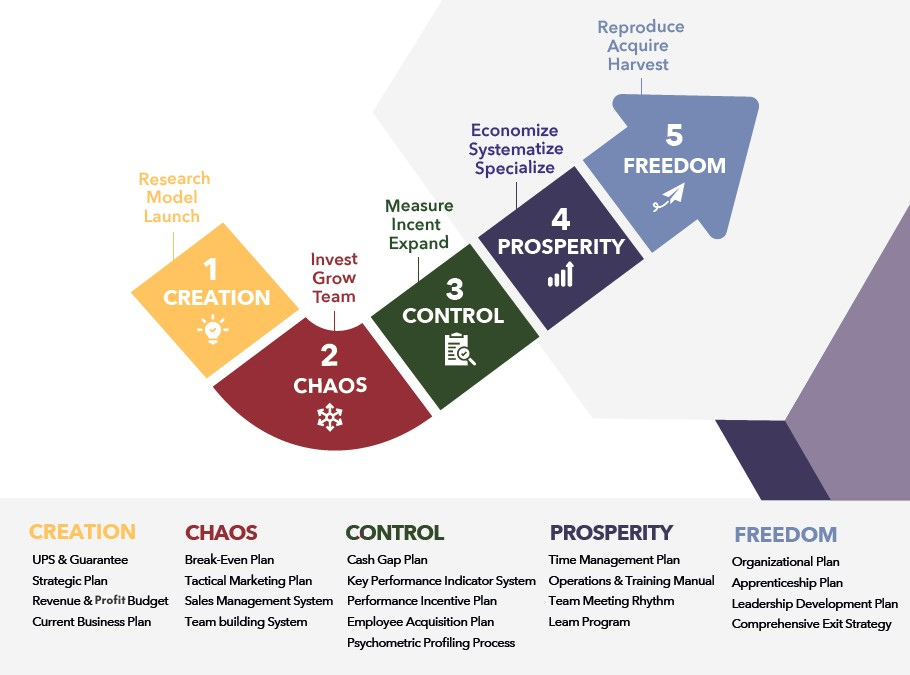
Free Methodology Presentation: Learn Our Proven 5-Step System For Transforming Your Business Into A Firm That Runs Smoothly, Profitably and (mostly) Without You
Free Methodology Presentation: Learn Our Proven 5-Step System For Transforming Your Business Into A Firm That Runs Smoothly, Profitably and (mostly) Without You.
Confirm Your Details To Continue
Confirm Your Details To Continue
Schedule a call to see if our approach can help take your business to #1 in your market.
No pie-in-the-sky. No generic ideas.
No hard sell.
Just straight-forward analysis of your approach to marketing and sales, team-building skills, gross and net profitability, and business transfer readiness.