
BLOG
BLOG

Bookkeeper, Accountant, Management Accountant, or Fractional CFO?
Why Most Business Owners Get This Wrong
One of the most common things I hear from business owners is this:
“I’ve got an accountant… but I still don’t feel on top of the numbers.”
That’s not a failure on your part.
And it’s usually not a failure on the accountant’s part either.
It’s a misunderstanding of roles.
As a business grows, the financial side doesn’t just get bigger - it gets more consequential. Decisions start to carry real weight. Timing matters. Cash flow gaps hurt faster. Guessing becomes expensive.
This is where many owners stall. Not because they lack effort or ambition, but because the financial function hasn’t grown up with the business.
Let’s break this down simply.
Finance Is a Leadership Skill, Not a Compliance Task
Early on, finance is mostly about survival:
Paying bills
Lodging BAS
Getting tax done on time
Later, finance becomes about leadership:
Knowing what you can afford before you commit
Understanding which parts of the business are really working
Making decisions with the headlights on, not in hindsight
Different stages require different financial capability.
That capability comes from distinct roles within the finance team
The Four Finance Roles (In Plain English)
1. Bookkeeper - Keeps the Score Correct
What they focus on: Accuracy
What timeframe: What’s already happened
Your bookkeeper makes sure transactions are captured properly. For example:
Sales, purchases, payroll, bills
Bank and credit card reconciliations
BAS preparation (if qualified)
Clean files for year-end
In some businesses, they’ll also handle invoicing, payment runs, or basic debtor follow-up, but that varies and should always be clarified.
Their job is simple, but critical:
keep the data clean.
What they don’t do is analyse, interpret, or advise.
Why this matters to you:
If the data is messy or late, every decision built on it is shaky.
2. Accountant - Keeps You Legal
What they focus on: Compliance and tax
What timeframe: The past
Your tax accountant:
Prepares and lodges tax returns
Finalises annual accounts
Advises on structure, GST, PAYG, super
Keeps you compliant with the ATO
This role is non-negotiable.
But it’s important to say this clearly:
Tax accountants are not there to run your business finances.
They look backward so the authorities are satisfied. That’s their lane.
Why this matters to you:
Compliance protects the business - but it doesn’t guide day-to-day decisions.
3. Management Accountant - Turns Numbers Into Insight
What they focus on: Performance
What timeframe: Now and next
This is where finance starts to become useful for business decision making
A management accountant helps you:
Build budgets and rolling forecasts
Track margins, costs, and profitability
See where money is being made - or leaked
Understand the impact of pricing, hiring, and growth decisions
This role works with the business, not just at year-end.
They can help answer questions like:
Which jobs or clients are actually profitable?
What happens to cash if we grow faster?
Where are we exposed right now?
Why this matters to you:
You stop managing by gut feel and start managing with clarity.
4. Fractional CFO - Helps You Decide What to Do Next
What they focus on: Direction and risk
What timeframe: The future
A fractional CFO provides financial leadership without the cost of a full-time executive.
They:
Build 12–24 month cash flow and financial models
Pressure-test growth decisions
Anticipate funding gaps before they appear
Set the financial rhythm, standards, system and discipline
Act as a sounding board for big calls
They don’t do bookkeeping.
They don’t lodge tax.
They use clean, timely information to help you lead.
Why this matters to you:
When decisions start to carry real financial risk, guessing is no longer an option.
Why One Role Can’t Do Four Jobs
I often see owners trying to get CFO-level advice from a bookkeeper or a tax accountant.
Each role has a different purpose. At the risk of oversimplification:
Bookkeeper: Records what happened
Accountant: Reports it legally
Management Accountant: Explains what it means
Fractional CFO: Helps you decide what to do
They’re complementary, not interchangeable.
What You Likely Need Next
Many businesses don’t need to let go of everything at once. But they do need support on the right next layer.
You may need:
A bookkeeper if admin is backing up or accounting system is behind / not yet set up
A management accountant if you don’t trust the reports
A fractional CFO if the numbers are clean but decisions feel heavy
An accountant at all times, for compliance
This is an apprenticeship in business.
As the business upgrades, the owner must upgrade too.
Final Thought
Finance isn’t about being “good with numbers.”
It’s about creating enough clarity to lead calmly.
When the right financial roles are in place:
You see problems earlier
Decisions feel steadier
Growth becomes intentional, not chaotic
If the owner wants a better business, first the business needs a better owner.
Getting the finance function right is one of the fastest ways to make that happen.

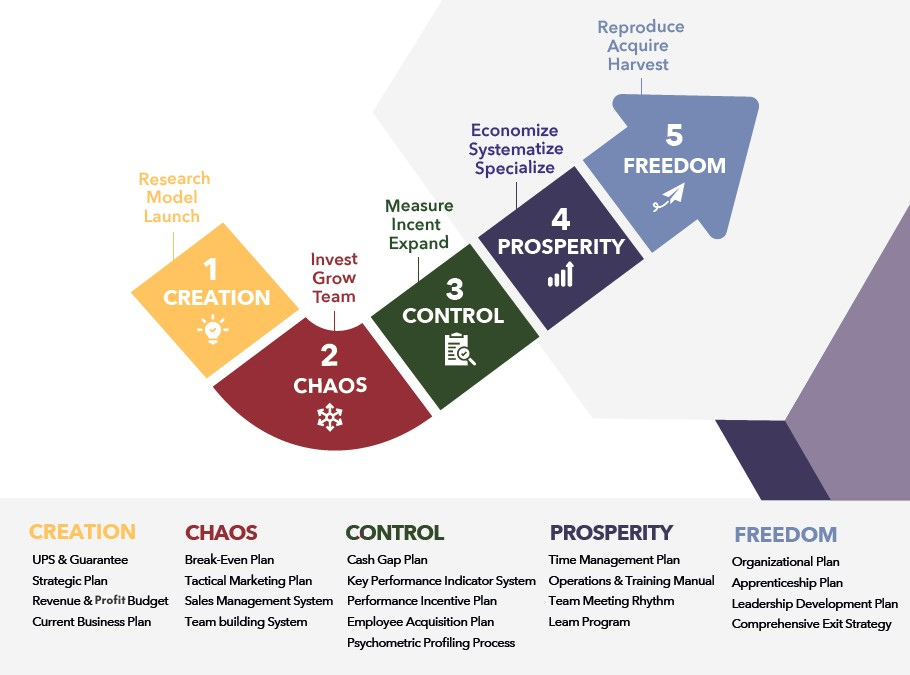
Free Methodology Presentation: Learn Our Proven 5-Step System For Transforming Your Business Into A Firm That Runs Smoothly, Profitably and (mostly) Without You
Free Methodology Presentation: Learn Our Proven 5-Step System For Transforming Your Business Into A Firm That Runs Smoothly, Profitably and (mostly) Without You.
Confirm Your Details To Continue
Confirm Your Details To Continue
Schedule a call to see if our approach can help take your business to #1 in your market.
No pie-in-the-sky. No generic ideas.
No hard sell.
Just straight-forward analysis of your approach to marketing and sales, team-building skills, gross and net profitability, and business transfer readiness.