
BLOG
BLOG

Why “We Need More Leads” Is Quietly Killing Your Growth
When growth slows, most businesses reach for the same answer:
“We need more leads”.
It sounds logical.
It’s also where things often start to go wrong.
Revenue softens. The pipeline feels thinner than it should. Sales become less predictable. So the instinct is to push harder at the top of the funnel: more ads, more traffic, more campaigns, more activity.
Sometimes that is the right move. But in many cases, it is not the first place to look.
Because what appears to be a lead problem is often something deeper: a positioning issue, a messaging issue, a conversion issue, or a mismatch between what the market needs to hear and what the business is actually saying.
And when that goes unchecked, pouring more volume into the system does not solve the problem. It magnifies it.
This is a shift most businesses go through at some point. The mistake is not wanting growth. The mistake is assuming more volume is the lever before properly diagnosing what is happening underneath.
The Real Problem Is Usually Efficiency, Not Attention
In most of the work I do with clients, the issue is not that the market has stopped paying attention.
It is that attention is not being converted into revenue efficiently enough.
That distinction matters.
Because once you diagnose the problem incorrectly, you start solving for the wrong thing. More spend gets approved. More campaigns get launched. More pressure gets placed on marketing. Yet the gap between effort and outcome keeps widening.
On the surface, it can look like the business is working hard to grow.
Behind the scenes, it is often just working harder to compensate for a system that is not pulling its weight.
The Cost of a Leaky System
Most business owners have heard the leaky bucket analogy.
Your business is the bucket.
Leads are the water.
If the bucket is solid, adding more water helps it fill. If it has holes, you can keep pouring more in, but you will lose more and more of it along the way.
Simple enough.
What often gets underestimated is the true cost of those leaks.
It is not just lost leads. It is the operational and commercial drag that comes with them:
Sales time spent on poor-fit enquiries
Longer sales cycles that never properly progress
Pricing pressure from buyers who were never a strong fit to begin with
Team capacity being absorbed by conversations that go nowhere
Margin being eroded while the business mistakes activity for traction
Growth being delayed despite increased effort and increased spend
Over time, that compounds.
You do not just end up with an inefficient pipeline. You end up with a business that becomes harder and more expensive to scale. More volume no longer creates leverage. It creates waste.
That is one of the clearest differences between businesses that scale efficiently and those that burn cash trying.
Where the Diagnosis Usually Goes Wrong
When performance dips, most businesses default to blaming marketing.
“We need better ads.”
“Maybe we are on the wrong platform.”
“We need more traffic.”
They are fair assumptions. But they are still assumptions.
In many cases, the channels are doing their job. Leads are coming in. There is movement at the top of the funnel. The problem shows up further downstream.
This is a pattern I see consistently across service-based businesses:
They are running ads, publishing content, generating enquiries, and doing enough on paper to suggest momentum. But when you look closer, the numbers tell a different story.
The lead quality is inconsistent.
Sales conversations drag out.
Conversion rates fluctuate.
Revenue feels lumpy and harder to forecast than it should.
The response is usually to increase activity.
More ads. More spend. More output.
But if the underlying system has not changed, the result rarely changes in any meaningful way either. Growth simply starts to feel heavier, slower, and more frustrating than it should.
A Quick Reality Check on “Bad Leads”
At this point, frustration often gets summarised in one sentence:
“We’re getting bad leads.”
Sometimes that is true. But often, it needs reframing.
Leads rarely behave randomly. They respond to the signals a business puts into the market.
If the messaging is broad, generic, or overly safe - “high quality,” “great service,” “we care about our clients” - it is not doing much filtering. It is simply making an open invitation.
And when the invitation is broad, the response will be too.
That typically means more of the following:
Price-driven buyers
People comparing multiple options with little real commitment
Enquiries that look interested but are not ready
Conversations that begin from scepticism rather than trust
That is usually not just a lead quality issue. It is a positioning and messaging issue.
The market is not malfunctioning. It is responding to the signals it has been given.
What This Looks Like in Practice
A while ago, I worked with a service-based business in a competitive professional services market that was generating roughly 40 to 50 enquiries per month through paid traffic and front-end marketing.
At first glance, the lead flow looked healthy. Plenty of activity. Enquiries coming in consistently. On the surface, it looked like marketing was doing its job.
But once we looked more closely, the real picture became clearer.
Less than a third of those enquiries were a strong fit. The team was spending hours each week on calls and follow-up that rarely converted. Pricing pressure was constant. Revenue had plateaued even though lead flow had not.
Their conclusion was the same one I hear often:
“We need more leads.”
But the data pointed elsewhere.
They did not need more volume first. They needed better alignment.
We refined three things:
who they were best suited to serve
the problem they solved at a deeper level
how that was communicated through their front-end messaging
The result was not dramatic in the way people often expect. Lead volume stayed broadly similar.
But conversion improved. Sales cycles shortened. The quality of conversations got better. The team spent less time on poor-fit opportunities. The pipeline became more commercially useful, not just more active.
Same traffic.
Different outcome.
That is what happens when the system stops leaking.
Why Positioning Carries More Weight Than Most Businesses Realise
Positioning is often treated like a branding exercise. In reality, it has a direct commercial function.
It shapes who pays attention, who opts in, and how the sales conversation begins.
At its core, strong positioning answers three questions clearly:
Who is this for?
What problem does it solve?
What outcome does it help create?
When those answers are vague, everything downstream gets harder.
Marketing has to work harder to capture attention. Sales has to work harder to build trust. The business ends up trying to compensate with more volume because the front end is not doing enough of the filtering and framing.
When positioning is clear and specific, the opposite happens.
The right people lean in earlier.
The wrong people filter out earlier.
Conversations begin with more context and less confusion.
That usually means less convincing, less friction, better use of time, and stronger conversion economics.
The Layer Most Businesses Miss: Timing
Even when positioning improves, there is another constraint that often gets overlooked:
timing.
Not everyone in the market is ready to buy today.
If your messaging only speaks to people at the moment of decision, you are operating in a very narrow slice of the market. You will miss the larger group sitting earlier in the buying journey:
people who know something is not working but have not yet defined the problem clearly
people who are exploring options but are not yet committed
people who are gathering context before deciding what to do next
If all your marketing effectively says is “buy now,” two things tend to happen.
First, the majority ignore it because it is too early for them.
Second, the minority who do respond are often comparing on price because they are already in active market mode.
That can create the illusion of low-quality leads, when the real problem is a mismatch between the message and the moment.
When Things Start to Click
When positioning, messaging, and timing start to align, the shift is usually noticeable fairly quickly.
Not just in the numbers, but in how the business feels to run.
Typically, you see:
stronger-fit enquiries
shorter and more direct sales conversations
less resistance around pricing
more predictable conversion patterns
better use of team time and attention
And importantly, this often happens before any major increase in spend.
Because the leverage is not always in doing more. Often, it is in making what you are already doing work properly.
Before You Turn the Tap On, Pressure-Test These Four Areas
Before increasing lead generation activity, it is worth stepping back and pressure-testing a few things honestly.
1. Positioning
If the right prospect landed on your page today, would it be obvious who you are best suited to help and who you are not? Or could five substitute providers say essentially the same thing?
2. Messaging
Are you articulating a problem your market already recognises in themselves? Or are you describing your service and expecting the reader to connect the dots on their own?
3. Conversion Patterns
Look at your last 15 to 20 enquiries. Not just whether they converted, but whether they should have converted.
How many were genuinely a strong fit?
Where did conversations lose momentum?
What objections came up repeatedly?
How much time did the team spend on opportunities that never had real buying intent?
The patterns here will usually tell you far more than the blanket statement “we need better leads.”
4. Buying Journey Alignment
What are you saying to people who are not ready yet? And how are you helping them move from awareness to consideration to decision over time?
The Real Risk of Getting This Wrong
If you keep trying to solve this with more leads before fixing the underlying issues, the costs tend to stack up in predictable ways.
You increase spend.
You increase noise in the pipeline.
You stretch team capacity.
You reinforce the same inefficiencies, just at a higher volume.
That makes growth more expensive, not more efficient.
And over time, that chips away at profit, time, energy, and momentum.
A Better Way to Approach It
There is nothing wrong with wanting more leads. Growth usually does require more demand at some stage.
But more demand only helps when the system behind it is sound.
Otherwise, it is just acceleration without direction.
The better approach is to step back and look at the full picture:
how you are positioned
how you are communicating
how your sales process is actually performing
how your market buys, and when they are ready
That is where the real leverage sits.
Most businesses do not have a lead problem first.
They have a clarity problem.
And until that is fixed, more leads will usually just make it more expensive to stay stuck.
If this feels familiar, it is worth taking a closer look at what is really happening inside your pipeline before turning up the volume.
This is exactly the kind of work we do with clients: diagnosing what is happening beneath the surface, fixing the points of friction, and creating a business that can grow more efficiently from there.

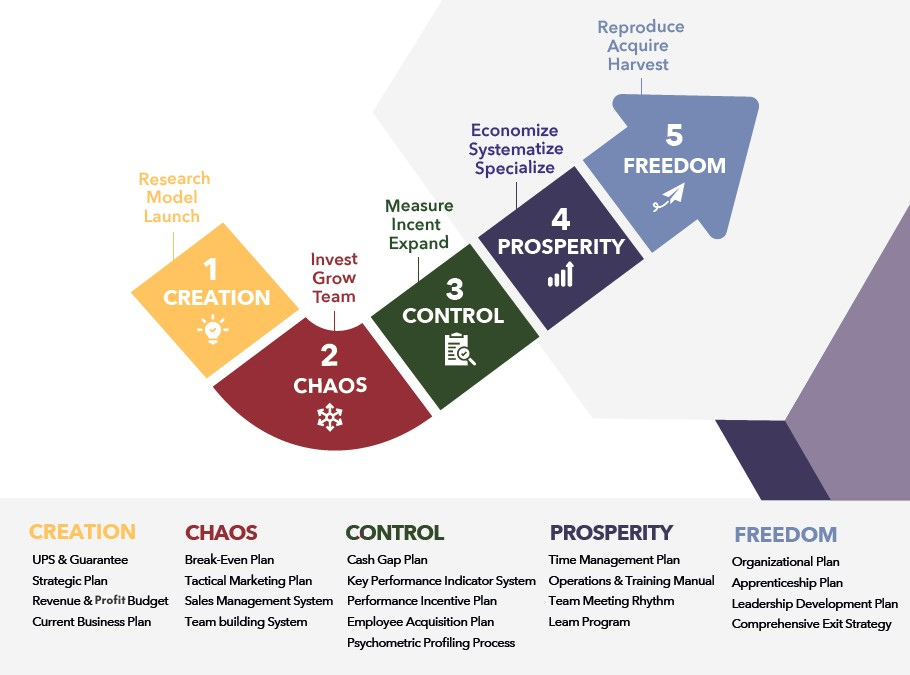
Free Methodology Presentation: Learn Our Proven 5-Step System For Transforming Your Business Into A Firm That Runs Smoothly, Profitably and (mostly) Without You
Free Methodology Presentation: Learn Our Proven 5-Step System For Transforming Your Business Into A Firm That Runs Smoothly, Profitably and (mostly) Without You.
Confirm Your Details To Continue
Confirm Your Details To Continue
Schedule a call to see if our approach can help take your business to #1 in your market.
No pie-in-the-sky. No generic ideas.
No hard sell.
Just straight-forward analysis of your approach to marketing and sales, team-building skills, gross and net profitability, and business transfer readiness.