
BLOG
BLOG

The One-Page Plan That Gives You Permission to Relax Over Christmas
For many business owners, Christmas doesn’t fully feel like a break.
They might be physically away from the business, but mentally they’re still “on”.
Thinking about next year.
Second-guessing decisions.
Wondering if you’ve missed something important.
That is not because you don’t work hard enough.
It’s because you don’t yet have closure.
And closure comes from clarity.
Why You Can’t Fully Switch Off
A lot of business owners describe the same thing: they’re tired.
But tired isn’t the root of the problem.
The real issue is unfinished thinking.
When you don’t have a clear plan, your brain keeps running background tabs:
“What should I be focusing on in January?”
“What if next year ends up the same as this one?”
“Am I actually working on the right things?”
Planning is important. But, it’s rarely urgent.
So it gets pushed aside. And the cost shows up later, usually during the time you were meant to rest.
What Happens When You Don’t Plan
Without a plan, everything feels important.
And when everything is important, nothing really is.
What I see over and over again is this:
Owners stay busy but stuck
Fires of the day quietly become fires of the year
Familiar patterns repeat, even when results aren’t improving
Then January rolls around, and instead of starting fresh, you’re reacting again.
That is not a motivation problem.
It’s a structure problem.
Why a One-Page Plan Changes Everything
You don’t need a 50-page strategic document.
You need:
Clear priorities
Confidence in direction
Something simple you actually trust
A one-page plan does that job far better than a thick folder that never gets opened.
When the plan is clear and visible, it quiets the noise.
And when the noise drops, you regain control.
The Permission Effect
Here’s what most people don’t realise.
A clear plan doesn’t just guide action.
It gives you permission.
Permission to:
Stop thinking about work over Christmas
Be present with your family
Properly switch off
That is not laziness. It’s leadership.
You’ve made the decisions already. There is nothing left to solve until January.
The Simple Framework Behind the One Page
A good one-page plan isn’t complicated.
It just answers the right questions.
Here is the structure I use with clients.
Step 1. Look Back to Learn Forward
What worked this year?
What didn’t?
No judgement. No blame.
Just lessons you don’t want to repeat (and ones you do).
Step 2. Name the Real Issues
You can’t solve problems you won’t name.
Time, team, money: every issue fits somewhere amongst these three.
Clarity starts with honesty.
Step 3. Paint a Medium-Term Picture
Not vague ambition.
A clear picture of where the business, and your life, will be in three to five years.
This anchors your decisions.
Step 4. Choose No More Than 3 to 5 Overarching Goals For 2026
This is where most plans fall apart.
The best-performing owners don’t do more.
They do less, consistently.
If it’s not in the top five, it waits.
Step 5. Map the First 90 Days
Momentum beats motivation.
If you know exactly what the first quarter looks like, January becomes calm instead of chaotic.
Why Less Really Is More
Across more than 100 clients, one pattern is consistent.
The owners who get the best results aren’t the busiest.
They’re the most focused.
Focus is not a personality trait.
It’s a skill.
And like any skill, it can be learned and installed.
What to Do Next
Before Christmas hits, block 60 to 90 minutes.
That is it.
Build your one-page plan.
Print it or save it somewhere visible.
Then ask yourself one simple question:
“If this is the only plan I follow next year, will it move the needle?”
If the answer is yes, you’re done.
You don’t need to have everything figured out.
You just need enough clarity to rest.

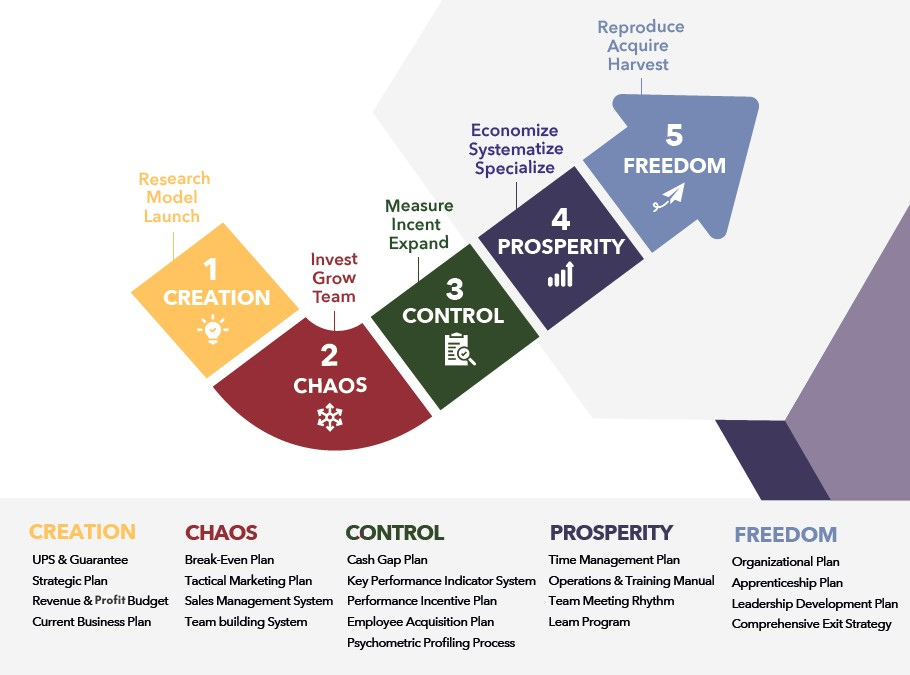
Free Methodology Presentation: Learn Our Proven 5-Step System For Transforming Your Business Into A Firm That Runs Smoothly, Profitably and (mostly) Without You
Free Methodology Presentation: Learn Our Proven 5-Step System For Transforming Your Business Into A Firm That Runs Smoothly, Profitably and (mostly) Without You.
Confirm Your Details To Continue
Confirm Your Details To Continue
Schedule a call to see if our approach can help take your business to #1 in your market.
No pie-in-the-sky. No generic ideas.
No hard sell.
Just straight-forward analysis of your approach to marketing and sales, team-building skills, gross and net profitability, and business transfer readiness.