
BLOG
BLOG

The Hidden Cost of Playing It Safe in Business
On paper, the business looks healthy.
Revenue is stable.
Cash in the bank.
Clients are happy.
But you’re still working 50+ hours a week.
This is where playing it safe starts to cost more than it protects.
I work with a lot of steady, capable business owners. They’re not reckless. They’re not gamblers. They’re not chasing shiny objects. They’re measured, responsible, and careful with money.
On the surface, that looks smart. And often, it is.
But I’ve seen this pattern dozens of times: staying in “protect mode” for too long quietly shifts the load back onto the owner; even when the business is profitable.
The “Protect Mode” Trap
Playing it safe usually looks like this:
Delaying a hire until it feels 100% secure
Avoiding investment because “what if revenue drops?”
Working longer hours instead of increasing capacity
Keeping extra cash in the bank “just in case”
It feels responsible.
You tell yourself, “Things are going well. Don’t mess it up.”
So you keep your head down.
You keep servicing clients.
You keep the wheels turning.
But underneath that caution, something else can start to happen: consistency without adaptation eventually becomes stagnation.
Not because you’re doing anything wrong - but because the business isn’t being given room to evolve.
And when the business doesn’t evolve, the pressure doesn’t disappear.
It simply shifts.
Onto you.
The Cost Isn’t Always Financial
Here’s the part many owners miss.
Playing it safe rarely costs you money immediately.
It costs you:
Time
Energy
Strategic momentum
Decision quality
Presence at home
You can be profitable and still feel stretched.
You’re still delivering.
But you’re carrying the business in your head.
Checking the bank balance before making decisions.
Second-guessing hires.
Waking up during the night thinking through scenarios you can’t solve in the dark.
The business is surviving - but you’re propping it up.
Why Safety Feels Rational
If you don’t have clear visibility of the next 12 months, every decision feels riskier than it needs to.
Hiring feels like gambling.
Upgrading systems feels “optional.”
Spending money feels irresponsible.
So the default becomes:
“Just keep doing what’s working.”
Sometimes that is the right move. Sometimes the right move is to wait. But waiting should be a decision - not a default.
Because if your business stays the same while the workload increases, the “safe” option quietly becomes the stressful option.
Short-Term Safety vs Long-Term Risk
Short-term safety feels good:
No sudden changes.
No new fixed costs.
No sleepless nights about payroll.
But long-term, the risk grows:
You stay the bottleneck
Growth stalls
Fatigue builds
The business remains dependent on you
Safe can slowly become stuck.
And stuck becomes heavy.
Two Quick Examples of What This Actually Looks Like
To make this practical, here are two common patterns I see.
Example 1: The profitable business that “couldn’t afford” help
A service business doing around seven figures in revenue. Stable. Profitable. The owner hadn’t hired in years because it didn’t feel “safe.” Once they modelled the numbers properly, it became clear they could have afforded a part-time operations role much earlier, and doing so would have freed meaningful hours each week without damaging cash flow. The problem wasn’t capability. It was visibility.
Example 2: The owner who kept choosing overtime over capacity
Another business had consistent demand, but instead of creating capacity, the owner just worked longer. Revenue rose slightly, but so did pressure. When they forecasted the next 12 months and staged a small, controlled hire, the business didn’t “blow up.” It stabilised - because the growth was structured.
Three Structured Ways to Grow Without Gambling
This isn’t about being reckless.
It’s about being structured.
1. Replace Guesswork With Headlights
Build a 12-month revenue, profit, and cash flow forecast.
Not what happened last year.
What’s happening next month.
And the month after that.
And the month after that.
This matters because forecasting doesn’t remove risk - it makes risk visible.
When you can see the numbers clearly, decisions stop being emotional. They become calculated.
It’s no longer: “Can I afford this?”
It becomes: “When can I afford this - and what needs to shift to make it happen?”
That’s structured courage.
2. Create Controlled Capacity
You don’t need to jump straight into a full-time senior hire.
You can:
Model the cost first
Trial part-time
Forecast the break-even point
Stage the transition
Safe doesn’t have to mean static.
Safe can mean small, controlled experiments - the kind that increase capacity without increasing chaos.
3. Increase Probability, Not Pressure
Confidence isn’t bravado.
It’s probability.
If your confidence in achieving your 12-month vision is around 5 out of 10, that’s a coin flip.
Without structure, it’s easy to stay at 5.
Structured growth improves the odds in your favour - not through hype, but through better decisions, better sequencing, and clearer numbers.
That’s the goal.
Not perfection.
Not overnight transformation.
Just improved probability.
If Nothing Changes…
Fast forward 12 months.
Revenue is slightly higher.
Stress is slightly higher.
Energy is slightly lower.
You’re still working long hours - not because the business is failing, but because it’s being maintained.
And maintenance won’t build the life you started this business for.
A Better Question
Instead of asking, “Can I afford to hire?”
Ask, “Can I afford to stay here for another year?”
That question shifts everything.
Because sometimes the biggest risk isn’t moving forward.
It’s standing still.
Safe Isn’t Always Secure
Playing it safe can be responsible.
But long-term security often requires short-term courage - not reckless courage, structured courage.
You don’t need to gamble the farm.
You need clarity, a plan, and the right next step.
If you’re profitable but stretched — and you suspect your caution is costing you more than it’s protecting — let’s build the numbers properly.
No pressure.
Just clarity.
Because the goal isn’t to take bigger risks.
It’s to design a business that doesn’t rely entirely on you.

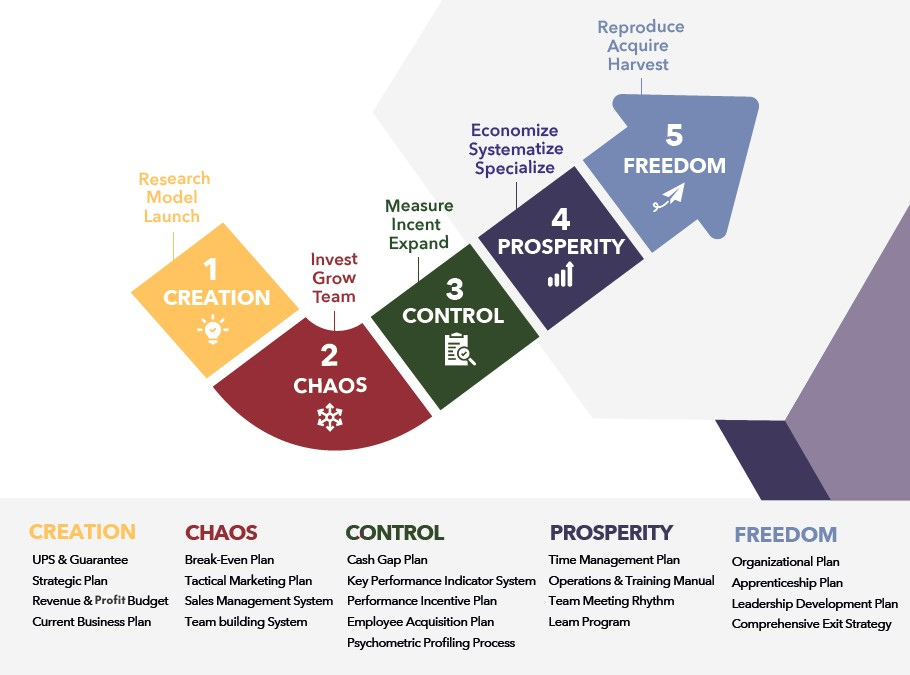
Free Methodology Presentation: Learn Our Proven 5-Step System For Transforming Your Business Into A Firm That Runs Smoothly, Profitably and (mostly) Without You
Free Methodology Presentation: Learn Our Proven 5-Step System For Transforming Your Business Into A Firm That Runs Smoothly, Profitably and (mostly) Without You.
Confirm Your Details To Continue
Confirm Your Details To Continue
Schedule a call to see if our approach can help take your business to #1 in your market.
No pie-in-the-sky. No generic ideas.
No hard sell.
Just straight-forward analysis of your approach to marketing and sales, team-building skills, gross and net profitability, and business transfer readiness.