
Your Business Growth Partner
GUIDING THE 'BEST KEPT SECRETS' TO #1 IN THEIR MARKET
Trent Butler is a Chartered Accountant who acts as a Business Coach, Growth Advisor and Marketing Strategist to growth-minded professional service business owners.
We'll help you increase your profits, implement systems to improve operations and build a team that can operate without you - giving you the money and freedom to live the life you want.
Your Business Growth Partner
GUIDING THE 'BEST KEPT SECRETS' TO #1 IN THEIR MARKET
Trent Butler is a Chartered Accountant who acts as a Business Coach, Growth Advisor and Marketing Strategist to growth-minded professional service business owners.
We'll help you increase your profits, implement systems to improve operations and build a team that can operate without you - giving you the money and freedom to live the life you want.
Just a few of the 'best kept secrets' we've worked with:

"I was attracted to Trent's clarity of what could be achieved, his process driven approach to achieving objectives, coupled with his knowledge and experience. It's been absolute pleasure working with Trent and his team. I am extremely pleased with the results...”
Giles Hill
Director, EQ Property
The Truth Is You Have A Lot On Your Plate When It Comes To Being #1 In Your Market...
You Might Be Struggling With:
Identifying & attracting the right type of higher-value client
- Past efforts have attracted the wrong type of client.
- Prospects just want to know 'price' and don't seem to care about anything else.
- Leads seem to take forever to sign-up and become a client.
You just want to attract higher-value clients who value your expertise and expect to pay a fair premium to work with you.
Monitoring cash flow & tracking return on investment
- You’re unsure what metrics to be tracking.
- You’re not clear on what benchmarks to aim for.
- You're not sure if your marketing is making or losing money.
You just want to understand dollars-in vs dollars-out and whether or not it's all worth it.
Developing process and people to handle the next growth phase
- Growth is starting to cause other operational challenges.
- Getting the right people in the right seats has become easier said than done.
- The team can never quite seem to follow process or consistently achieve what is expected.
- You're getting pulled in a hundred different directions and clients are beginning to notice.
You just want to get everyone on the same page and following processes that actually work and scale.
Figuring out what to do and what not to do next from a marketing and business development standpoint
- Exactly who is our ideal client and how do we get more of them?
- Just what is our point of difference (or do we even have one)?
- Do people see us as a commodity service provider?
- What 'tactics' would work best specifically for our firm and stage of business?
- Where should we be spending our marketing dollars and efforts?
You just want to know what you should be doing and why.
Aligning the leadership team on strategy, planning and execution
- The leadership team is losing sight of the bigger picture (core mission, vision and values).
- Key team members just can't seem to agree on what should be done next, how and why.
- Problems use to be handled quickly but now take weeks/months to resolve.
- Important but not urgent activities are just not getting done.
You just want everyone in the business aligned and beating to the same drum.
Just a few of the 'best kept secrets' we've worked with:






"I was attracted to Trent's clarity of what could be achieved, his process driven approach to achieving objectives, coupled with his knowledge and experience. It's been absolute pleasure working with Trent and his team. I am extremely pleased with the results...”
Giles Hill
Director, EQ Property
THE TRUTH IS YOU HAVE A LOT ON YOUR PLATE WHEN IT COMES TO BEING #1 IN YOUR MARKET...
You Might Be Struggling With:
Identifying & attracting the right type of higher-value client
- Past efforts have attracted the wrong type of client.
- Prospects just want to know 'price' and don't seem to care about anything else.
- Leads seem to take forever to sign-up and become a client.
You just want to attract higher-value clients who value your expertise and expect to pay a fair premium to work with you.
Monitoring cash flow & tracking return on investment
- You’re unsure what metrics to be tracking.
- You’re not clear on what benchmarks to aim for.
- You're not sure if your marketing is making or losing money.
You just want to understand dollars-in vs dollars-out and whether or not it's all worth it.
Developing process and people to handle the next growth phase
- Growth is starting to cause other operational challenges.
- Getting the right people in the right seats has become easier said than done.
- The team can never quite seem to follow process or consistently achieve what is expected.
- You're getting pulled in a hundred different directions and clients are beginning to notice.
You just want to get everyone on the same page and following processes that actually work and scale.
Figuring out what to do and what not to do next from a marketing and business development standpoint
- Exactly who is our ideal client and how do we get more of them?
- Just what is our point of difference (or do we even have one)?
- Do people see us as a commodity service provider?
- What 'tactics' would work best specifically for our firm and stage of business?
- Where should we be spending our marketing dollars and efforts?
You just want to know what you should be doing and why.
Aligning the leadership team on strategy, planning and execution
- The leadership team is losing sight of the bigger picture (core mission, vision and values).
- Key team members just can't seem to agree on what should be done next, how and why.
- Problems use to be handled quickly but now take weeks/months to resolve.
- Important but not urgent activities are just not getting done.
You just want everyone in the business aligned and beating to the same drum.
Professional business coaching can help you:
Improve operations, implement systems and remove bottlenecks so that you get your time back.
Hire and train the right team, communicate better with each other and eliminate people problems.
Grow your business with bigger and better clients.
Overcome cash flow issues and improve your financial management.
Make better decisions and become more profitable.
WELL... YOU CAN!
Butler & Co Advisory is a small team of experienced entrepreneurs coaching aspiring entrepreneurs. We are experts in one thing – growing profitable companies through an appropriate mix of business coaching, growth advisory and marketing strategy consulting.
Whereever you're stuck, we can help:

MORE LEADS, SALES, AGGRESSIVE GROWTH?
YOU GOT IT.
MORE LEADS, SALES, AGGRESSIVE GROWTH? YOU GOT IT.
You won’t believe how easy it is to get your phone ringing with top-shelf, ready-to-buy prospects until you see our methodology for yourself. It’s time for you to set the pace and leave your competitors behind.

RECRUIT & RETAIN WINNERS INSTEAD OF LOSERS?
COMING RIGHT UP.
RECRUIT & RETAIN WINNERS INSTEAD OF LOSERS? COMING RIGHT UP.
Only the very best hiring managers win the perpetual war for talent. You’ll join the ranks of elite recruiters when you learn how the top guns do it. It’s time to get the rock stars you deserve and let the rest work for the others.
CONTROL YOUR CASH AND STASH MONEY AWAY?
EASY.
CONTROL YOUR CASH AND STASH MONEY AWAY? EASY.
Smart business owners know how to control costs, forecast and manage cash, and grow profits. It’s time to control the flow of money through your business and build a large pile of cash in your bank account.
GET YOUR BUSINESS READY TO SELL FOR BIG BUCKS? LET’S ROLL.
Any business can be turned into a cash machine that runs with minimal to zero daily involvement of the owner(s). It’s time to turn your staff into a team that will run your business like they own it, so you can sell it to whomever you wish, whenever you wish.
Who We Work With
We work primarily with established business owners in the following categories.

Advisory Firms
Accounting firms, consulting firms, real estate agencies, medical clinics and marketing agencies.

Professionals
Consultants, coaches, real estate agents, accountants, mortgage brokers, medical practitioners, marketers and freelancers.

Our Founder & Lead Business Coach, Trent Butler
The vision of Butler & Co Advisory is to be the undisputed market leader in business growth advisory services in Australia.
Our plan to achieve that vision is to work hand-in-hand with a smaller volume of exceptionally talented industry experts, taking each of them to 'market-leader' status in their respective niches and/or geographic locations. We then let their results do our talking.
A Chartered Accountant, Trent has over 10 years experience working across three different firms spanning the three 'tiers' of the accounting profession; a small boutique firm, a mid-tier firm and the ‘big 4’ firm – Pricewaterhouse Coopers.
Since founding Butler & Co Advisory in 2018, Trent has worked with over 50+ Australian professional service businesses. He deeply understands the nuances, growth challenges and stakeholder dynamics that present at every stage of a firm's life cycle.
Trent knows how both prospective clients and professional staff conduct their due diligence and choose a professional service provider in the modern digital world.
He understands that as your business grows and thrives, so will our partnership. So let’s talk, we promise it will be a breath of fresh air.
Our Founder & Lead Business Coach, Trent Butler
The vision of Butler & Co Advisory is to be the undisputed market leader in business growth advisory services in Australia.
Our plan to achieve that vision is to work hand-in-hand with a smaller volume of exceptionally talented industry experts, taking each of them to 'market-leader' status in their respective niches and/or geographic locations. We then let their results do our talking.
A Chartered Accountant, Trent has over 10 years experience working across three different firms spanning the three 'tiers' of the accounting profession; a small boutique firm, a mid-tier firm and the ‘big 4’ firm – Pricewaterhouse Coopers.
Since founding Butler & Co Advisory in 2018, Trent has worked with over 50+ Australian professional service businesses. He deeply understands the nuances, growth challenges and stakeholder dynamics that present at every stage of a firm's life cycle.
Trent knows how both prospective clients and professional staff conduct their due diligence and choose a professional service provider in the modern digital world.
He understands that as your business grows and thrives, so will our partnership. So let’s talk, we promise it will be a breath of fresh air.
What is Trent like to work with?
Click on the images below to watch the videos.
LOCATE BUYERS AGENCY
"Their [Trent's] approach with us has been fantastic and I really like that they actually care about their clients. They're actually interested in you getting the best results possible, and that shows up in how they work and how they approach what they do.
They're very strategic. They'll come up with great ideas and great ways in which you can improve on your business."
Shane Hiscock, Founder & Buyers Agent, Locate Buyers Agency

“They listened to our requirements and concerns and formulated a plan tailored to our specific circumstances. We feel they delivered a practical and detailed strategy that suits our needs and reflects our values and we are now working with Butler & Co to implement this.”
Chris Clarke
Partner, Clarke & Brownrigg Chartered Accountants Adelaide
CFO-ONE ADVISORS
“It took us a couple of months to really get clicking, and then around months three or four, we really started to see a huge return on investment which was fantastic.”
Mike Urness, CEO, CFO-One Advisors

“Wow very promising stats actually…Can’t wait to ramp this up next year given the high enquiry to click through rate and high organic search rate (with no SEO!)”
James Livingston
Founder & Partner,
Arc Medical Accountants
PROPERTY FRONTLINE
"What a positive experience it was working with Trent. What I particularly liked was the mix of tools and feedback that helped me connect with clients in a systemised and targeted way, which saved me so much time."
Debra Beck-Mewing, Founder & CEO, Property Frontline

“Working with Butler & Co has been such a positive experience, helping me develop a suitable marketing strategy and generate high quality leads. Butler & Co are very professional and have a very strategic approach with lead generating. We’ve achieved outstanding results and through my experience, I can honestly recommend Butler & Co and the services 100%.”
Maryanne Drosos
Founder & Director,
Blue Diamond Recruitment
B2B LEADS
“Being a lead gen and marketing guy, I thought my sales process was down pat to be honest...
He [Trent] showed me his methods of conducting sales calls and strategy sessions, which turned out to be way more effective."
Ryan Caswell, Founder, B2B Leads

“I'm so grateful for the support and guidance that Butler & Co’s business coaching has provided me thus far. Without them, I’m not sure if I would have continued in business. I'm now excited for the future and for what's next – we’re only just getting started!”
Kristie Oldfield
Founder & Director,
Parabroker.au
ACHIEVE MARKET LEADING STATUS WITHOUT:

The hassle and risk of taking on a business partner or prematurely hiring and managing a full-time marketing, finance or operations person.
Replacing your existing team members.
Throwing away what is already working.
Schedule a call to see if our approach can help take your business to #1 in your market.
ACHIEVE MARKET LEADING STATUS WITHOUT:
The hassle and risk of taking on a business partner or prematurely hiring and managing a full-time marketing, finance or operations person.
Replacing your existing team members.
Throwing away what is already working.
Schedule a call to see if our approach can help take your business to #1 in your market.
COACHING WILL PAY OFF OVER THE LONG TERM - AND WE GUARANTEE RESULTS.
'Win/Win' is a core value here at Butler & Co Advisory, which is why we offer a return on investment guarantee.
Investment presumes that there will be a return. Otherwise, it’s just an expense.
If you qualify – and do the work – we offer a guarantee:
After 17 weeks of coaching, you will agree that coaching has paid for itself - or we will work with you at no charge until that is true.
This drives us to do great work and ensure we're only commencing relationships with those who we're sure will see commercially positive outcomes.
Our latest articles to help you grow your business

The Two Types of Money Problems Every Business Owner Must Solve
“We’re Busy… So Where’s the Money Going?”
If you have been in business for any length of time, you have probably had this thought:
“We’re flat out. The team is busy. Clients seem happy. So why does money still feel tight?”
It is one of the most frustrating experiences a business owner can face.
You are working hard.
Your team is working hard.
Projects are being delivered.
Invoices are going out.
Yet somehow, there never seems to be quite enough cash.
You look at the bank account and wonder where all the effort is actually going.
After working with business owners across trades, agencies, consulting firms, property businesses and professional services, one pattern becomes clear: most money problems are misdiagnosed at first.
The owner usually assumes one of two things:
“We just need more sales.”
“We need to cut costs.”
Sometimes either of those may be true.
But often, the real issue sits deeper.
In my experience, most business owners are dealing with one of two very different challenges:
A financial control problem.
A revenue generation problem.
Many are dealing with both.
Importantly, having one or both of these challenges does not necessarily mean you are failing as a business owner. In many cases, it simply reflects the next skill, system, or capability your business needs to develop.
The good news is that once you identify which problem you actually have, the path forward becomes much clearer.
The Two Dimensions of Financial Success
Most business owners think money is simply about making more sales.
It is not.
Financial strength comes from two separate but connected disciplines.
Dimension 1: Understanding and Managing Your Financials
This is about control.
It means knowing:
Where your money comes from
Where your money goes
How much cash you have available
Which jobs, clients, services or products are actually profitable
What is likely to happen financially over the next 4, 8 and 13 weeks
Business owners who strengthen this area tend to make better, calmer decisions because they are working with facts rather than assumptions.
They do not simply ask, “What is in the bank today?”
They ask, “What is likely to happen next?”
More importantly, they have simple forecasting tools, dashboards and reporting systems that help answer that question with something more reliable than gut feel alone.
Dimension 2: Generating More Revenue
This is about growth.
It is your ability to:
Generate quality enquiries
Convert prospects into clients
Communicate value clearly
Deliver consistently
Retain and expand existing relationships
Without this capability, revenue can become unpredictable, no matter how well the finances are managed.
The strongest businesses work on both.
Unfortunately, many owners focus heavily on one while neglecting the other.
Two Common Business Owner Patterns
The Financially Tidy Business With No Growth Engine
This owner knows the numbers.
Every expense is tracked.
Every dollar is accounted for.
Financial reports are neat and tidy.
The problem?
There is no consistent marketing system.
Lead flow is unpredictable.
Sales depend heavily on referrals, repeat work, or personal relationships.
This business may be financially tidy, but it lacks commercial momentum.
The Busy Business With Weak Financial Control
This owner has the opposite problem.
Revenue is growing.
New work keeps coming in.
The business looks successful from the outside.
But underneath the surface, margins are unclear, cash flow is tight, and the owner is never quite sure whether the business is actually making enough money.
A builder might have six months of work ahead and still feel cash pressure because materials, subcontractors and wages must be paid before progress payments arrive.
A marketing agency might be profitable on paper but still struggle because payroll is due fortnightly while clients take 30, 45 or 60 days to pay.
A consultant might have strong revenue but no clear view of which clients are profitable and which ones consume too much time for too little return.
These businesses do not necessarily have a sales problem.
They may have a control problem.
Both types of owners have money problems.
They are just different types of money problems.
Money Problem #1: Lack of Financial Control
Financial control problems often hide in plain sight.
The business may look fine from the outside.
The team is busy.
Clients are being served.
Revenue is coming in.
But the owner still feels uneasy.
Common warning signs include:
Making decisions based mainly on today’s bank balance
No rolling cash flow forecast
Surprise GST, PAYG, superannuation or tax bills
Uncertainty around job or client profitability
Not knowing whether the next hire is affordable
Feeling nervous about payroll, even when sales are strong
One pattern I see repeatedly is that owners often know they have a cash flow issue long before they formally acknowledge it.
They feel it first as stress.
Then hesitation.
Then delayed decisions.
Then pressure around wages, tax, suppliers or debtors.
The numbers eventually confirm what the owner has already been feeling for months.
Why Financial Control Problems Happen
Most owners do not start a business because they love budgeting, forecasting and KPI reporting.
They start because they are good at a trade, profession, service or skill.
They might be excellent builders, consultants, designers, accountants, buyers agents, marketers, engineers or operators.
At first, the numbers are often simple enough to manage by feel.
But as the business grows, complexity grows with it.
More staff.
More clients.
More suppliers.
More jobs.
More tax obligations.
More moving parts.
Eventually, the informal systems that worked at $500,000 in revenue stop working at $1 million, $2 million or beyond.
Financial control problems often stem from:
Avoidance of the numbers
Lack of financial literacy
Over-reliance on the bank balance
Poor debtor management
Weak reporting rhythms
Owner dependency
This is not a character flaw.
It is a systems gap.
How to Strengthen Financial Control
The goal is not to become an accountant.
The goal is to become an informed and responsible business owner.
You do not need to know every technical accounting detail.
But you do need enough visibility to make confident decisions and ensure the right financial systems are in place.
Depending on the size and complexity of the business, that may include:
A simple KPI dashboard
A monthly management reporting process
Regular reviews of debtors and cash position
Profitability reporting by client, job or service line
A rolling 13-week cash flow forecast where cash flow is tight or visibility is limited
The tighter cash becomes, the more important forecasting becomes.
The purpose is not reporting for the sake of reporting.
The purpose is better decision-making.
Money Problem #2: Inability to Generate Revenue Consistently
The second money problem is inconsistent revenue generation.
This business may be financially organised.
The owner may understand the numbers.
The problem is demand.
Work arrives inconsistently.
Revenue fluctuates.
The future feels uncertain.
Common warning signs include:
Feast-and-famine revenue cycles
Heavy reliance on referrals
Inconsistent enquiries
Discounting to win work
Low conversion from enquiry to client
No clear marketing plan
Regular concern about where the next client will come from
The business survives, but growth feels unpredictable.
The owner is not necessarily bad at what they do.
In fact, they may be excellent at delivery.
But being excellent at delivery does not automatically create a predictable pipeline.
Why Revenue Generation Problems Happen
Revenue problems are rarely solved by simply “doing more marketing.”
Common causes include:
Unclear positioning
Weak messaging
Fear of selling
Inconsistent marketing activity
No defined sales process
Poor follow-up
Attracting the wrong type of client
Relying too heavily on referrals
Many service businesses are especially vulnerable to this.
They grow through referrals for years, which is wonderful while it lasts.
But eventually, referrals alone may not be enough to support the next stage of growth.
That is when the owner realises they do not have a marketing system.
They have goodwill.
Goodwill matters.
But goodwill is not a complete growth strategy.
How to Strengthen Revenue Generation
The goal is not more noise.
The goal is more predictability.
A stronger revenue generation system usually includes:
Clear positioning
A defined ideal client
A strong value proposition
Consistent marketing activity
A repeatable sales process
A simple buying journey
Reliable follow-up
For example, a professional services firm might commit to:
One educational article per week
Five referral partner conversations per month
Monthly email nurture to its database
Five follow-up calls to past enquiries each week
Tracking enquiry source and conversion rate each week
The power is not in any one activity.
The power is in the rhythm.
Businesses often find growth becomes more predictable when lead generation becomes a process rather than an event.
You Do Not Have to Do It All Yourself
This is an important point.
As the business grows, the owner should not necessarily be the person doing every financial report, building every forecast, writing every marketing campaign, or managing every lead.
But someone must own these functions.
That might be:
The Owner
A Chief Financial Officer (CFO) or external finance partner
A Chief Marketing Officer (CMO) or external marketing coordinator
A Sales Manager
The key is not that the owner personally does everything.
The key is that the owner takes responsibility for ensuring the right systems exist.
You can learn the skill.
You can delegate the function.
You can outsource the expertise.
But you cannot ignore the responsibility.
If nobody owns financial control, the business will eventually feel financially unclear.
If nobody owns revenue generation, the business will eventually feel commercially unpredictable.
This is often the next stage of maturity for an established business owner.
Not doing more.
Not working longer hours.
But making sure the right people, tools and rhythms are in place.
The Most Dangerous Situation: Having Both Problems
Some businesses suffer from both challenges at the same time.
They do not understand their financial position.
And they do not have a reliable way to generate revenue.
This is where business ownership can become exhausting.
The owner is not just working long hours.
They are carrying the emotional weight of the business.
They are thinking about payroll while having dinner with their family.
They are checking the bank account before bed.
They are waking up at 3:00am wondering whether the next BAS payment will fit.
They are worried about letting staff down.
They are missing personal time but still not feeling financially rewarded.
This is the trap many established business owners fall into.
They are too busy to stop.
But too stuck to keep going the same way.
Working harder rarely fixes the problem.
Better systems do.
A Simple Self-Assessment
If you are unsure where your biggest challenge lies, answer the following questions honestly.
Financial Control Questions
Do I know my likely cash position 13 weeks from now?
Do I understand my true profitability?
Do I review financial performance weekly?
Can I identify financial issues before they become emergencies?
Do I know which clients, jobs or services are most profitable?
Am I making decisions based on facts, or mostly on the bank balance?
Revenue Generation Questions
Can I predict where next month’s enquiries will come from?
Can I clearly explain why clients choose us?
Do I have a repeatable sales process?
Is lead generation happening consistently regardless of referrals?
Do we follow up opportunities properly?
Are we attracting the right type of client?
Interpreting Your Results
If most of your gaps are financial, your next step is not necessarily more sales.
It is visibility.
Focus on:
Cash flow forecasting
KPI reporting
Weekly financial reviews
Debtor management
Margin analysis
If most of your gaps are revenue-related, your next step is not simply “more marketing.”
It is a better growth system.
Focus on:
Positioning
Marketing activity
Sales process
Lead generation
Follow-up
Buying journey
If both areas are weak, start with financial control.
Stability creates breathing room.
Once you can see the numbers clearly, you can make better decisions about where and how to grow.
Then build the revenue systems from a stronger foundation.
The Goal Is Not Just More Revenue. The Goal Is Financial Strength.
Many business owners chase revenue.
Fewer intentionally build financial strength.
They are not the same thing.
I have seen businesses with impressive revenue remain under constant pressure because the systems underneath the revenue were weak.
I have also seen smaller businesses feel far more controlled, profitable and calm because the owner had clear numbers, strong margins, reliable lead flow and disciplined decision-making.
Financially strong businesses tend to do five things consistently:
They know their numbers.
They manage cash proactively.
They market consistently.
They sell with confidence.
They build systems instead of relying on luck.
That is the real goal.
Not just a bigger business.
A stronger one.
Where Is Your Real Money Problem?
Most business owners already know they have a money challenge somewhere in the business.
The harder question is this:
Is your biggest challenge a financial control problem?
Or
Is it a revenue generation problem?
Because once you identify the real issue, you can stop treating symptoms and start addressing causes.
That is where meaningful progress begins.
Take five minutes this week and honestly assess which category describes your business best.
If you are brave enough, ask your accountant, bookkeeper, business partner, senior team member or business coach the same question.
You may be surprised by what you discover.
The answer will likely tell you exactly where to focus next.
If you would like an independent perspective on your business, I invite you to book a 15-minute conversation. Together, we can identify what may be holding the business back and determine which system or capability deserves attention next to help you build a business that runs more smoothly, profitably, and with less stress.
https://www.butleradvisory.com.au/time-with-trent

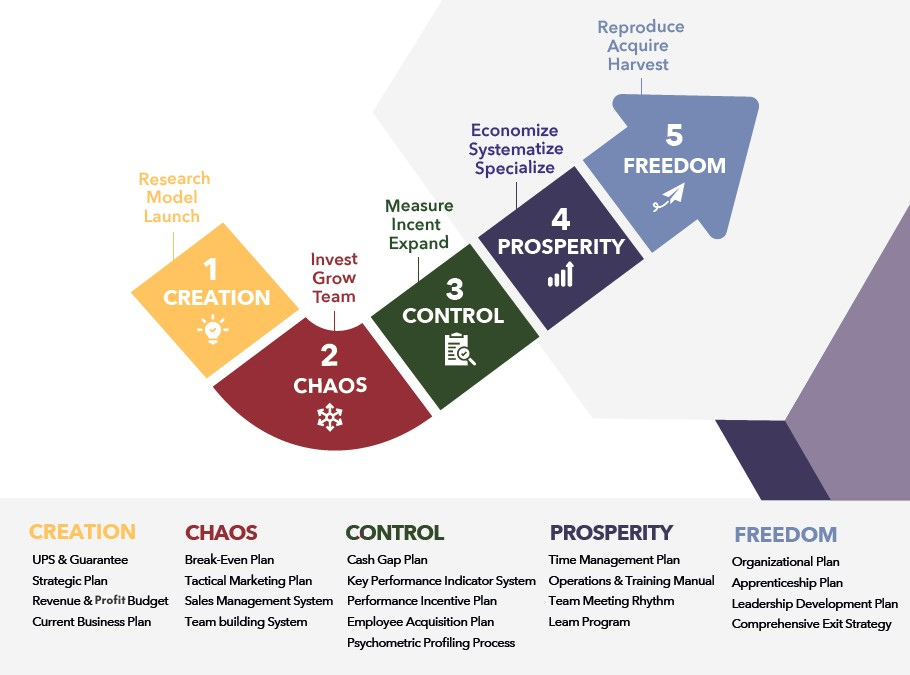
Subscribe To Watch Our Free Methodology Presentation: Learn Our Proven 5-Step System For Transforming Your Business Into A Firm That Runs Smoothly, Profitably and (mostly) without You.
Confirm Your Details To Continue

Subscribe To Watch Our Free Methodology Presentation: Learn Our Proven 5-Step System For Transforming Your Business Into A Firm That Runs Smoothly, Profitably and (mostly) without You.
Confirm Your Details To Continue
Schedule a call to see if our approach can help take your business to #1 in your market.
No pie-in-the-sky. No generic ideas.
No hard sell.
Just straight-forward analysis of your approach to marketing and sales, team-building skills, gross and net profitability, and business transfer readiness.