
Your Business Growth Partner
GUIDING THE 'BEST KEPT SECRETS' TO #1 IN THEIR MARKET
Trent Butler is a Chartered Accountant who acts as a Business Coach, Growth Advisor and Marketing Strategist to growth-minded professional service business owners.
We'll help you increase your profits, implement systems to improve operations and build a team that can operate without you - giving you the money and freedom to live the life you want.
Your Business Growth Partner
GUIDING THE 'BEST KEPT SECRETS' TO #1 IN THEIR MARKET
Trent Butler is a Chartered Accountant who acts as a Business Coach, Growth Advisor and Marketing Strategist to growth-minded professional service business owners.
We'll help you increase your profits, implement systems to improve operations and build a team that can operate without you - giving you the money and freedom to live the life you want.
Just a few of the 'best kept secrets' we've worked with:

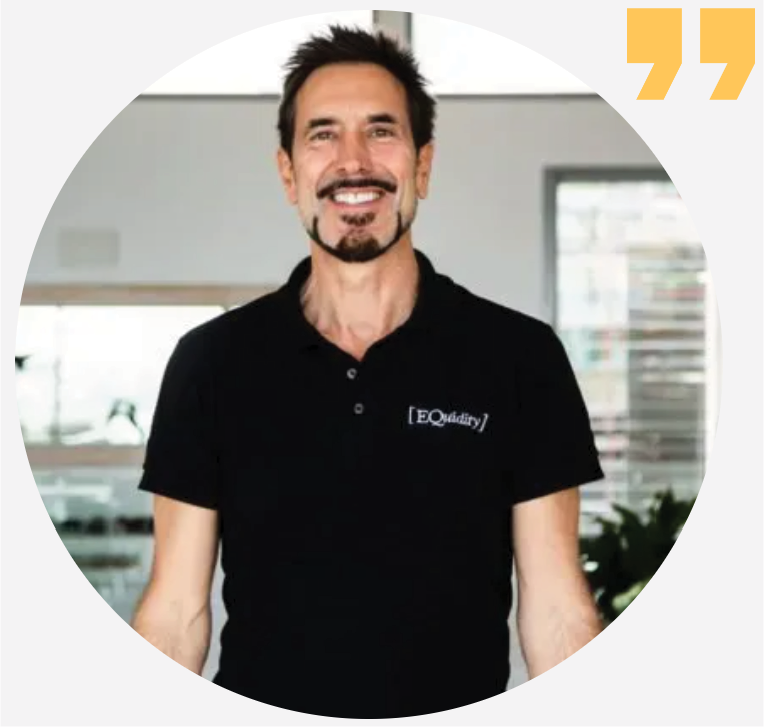
"I was attracted to Trent's clarity of what could be achieved, his process driven approach to achieving objectives, coupled with his knowledge and experience. It's been absolute pleasure working with Trent and his team. I am extremely pleased with the results...”
Giles Hill
Director, EQ Property
The Truth Is You Have A Lot On Your Plate When It Comes To Being #1 In Your Market...
You Might Be Struggling With:
Identifying & attracting the right type of higher-value client
- Past efforts have attracted the wrong type of client.
- Prospects just want to know 'price' and don't seem to care about anything else.
- Leads seem to take forever to sign-up and become a client.
You just want to attract higher-value clients who value your expertise and expect to pay a fair premium to work with you.
Monitoring cash flow & tracking return on investment
- You’re unsure what metrics to be tracking.
- You’re not clear on what benchmarks to aim for.
- You're not sure if your marketing is making or losing money.
You just want to understand dollars-in vs dollars-out and whether or not it's all worth it.
Developing process and people to handle the next growth phase
- Growth is starting to cause other operational challenges.
- Getting the right people in the right seats has become easier said than done.
- The team can never quite seem to follow process or consistently achieve what is expected.
- You're getting pulled in a hundred different directions and clients are beginning to notice.
You just want to get everyone on the same page and following processes that actually work and scale.
Figuring out what to do and what not to do next from a marketing and business development standpoint
- Exactly who is our ideal client and how do we get more of them?
- Just what is our point of difference (or do we even have one)?
- Do people see us as a commodity service provider?
- What 'tactics' would work best specifically for our firm and stage of business?
- Where should we be spending our marketing dollars and efforts?
You just want to know what you should be doing and why.
Aligning the leadership team on strategy, planning and execution
- The leadership team is losing sight of the bigger picture (core mission, vision and values).
- Key team members just can't seem to agree on what should be done next, how and why.
- Problems use to be handled quickly but now take weeks/months to resolve.
- Important but not urgent activities are just not getting done.
You just want everyone in the business aligned and beating to the same drum.
Just a few of the 'best kept secrets' we've worked with:





"I was attracted to Trent's clarity of what could be achieved, his process driven approach to achieving objectives, coupled with his knowledge and experience. It's been absolute pleasure working with Trent and his team. I am extremely pleased with the results...”
Giles Hill
Director, EQ Property
THE TRUTH IS YOU HAVE A LOT ON YOUR PLATE WHEN IT COMES TO BEING #1 IN YOUR MARKET...
You Might Be Struggling With:
Identifying & attracting the right type of higher-value client
- Past efforts have attracted the wrong type of client.
- Prospects just want to know 'price' and don't seem to care about anything else.
- Leads seem to take forever to sign-up and become a client.
You just want to attract higher-value clients who value your expertise and expect to pay a fair premium to work with you.
Monitoring cash flow & tracking return on investment
- You’re unsure what metrics to be tracking.
- You’re not clear on what benchmarks to aim for.
- You're not sure if your marketing is making or losing money.
You just want to understand dollars-in vs dollars-out and whether or not it's all worth it.
Developing process and people to handle the next growth phase
- Growth is starting to cause other operational challenges.
- Getting the right people in the right seats has become easier said than done.
- The team can never quite seem to follow process or consistently achieve what is expected.
- You're getting pulled in a hundred different directions and clients are beginning to notice.
You just want to get everyone on the same page and following processes that actually work and scale.
Figuring out what to do and what not to do next from a marketing and business development standpoint
- Exactly who is our ideal client and how do we get more of them?
- Just what is our point of difference (or do we even have one)?
- Do people see us as a commodity service provider?
- What 'tactics' would work best specifically for our firm and stage of business?
- Where should we be spending our marketing dollars and efforts?
You just want to know what you should be doing and why.
Aligning the leadership team on strategy, planning and execution
- The leadership team is losing sight of the bigger picture (core mission, vision and values).
- Key team members just can't seem to agree on what should be done next, how and why.
- Problems use to be handled quickly but now take weeks/months to resolve.
- Important but not urgent activities are just not getting done.
You just want everyone in the business aligned and beating to the same drum.
Professional business coaching can help you:
Improve operations, implement systems and remove bottlenecks so that you get your time back.
Hire and train the right team, communicate better with each other and eliminate people problems.
Grow your business with bigger and better clients.
Overcome cash flow issues and improve your financial management.
Make better decisions and become more profitable.
WELL... YOU CAN!
Butler & Co Advisory is a small team of experienced entrepreneurs coaching aspiring entrepreneurs. We are experts in one thing – growing profitable companies through an appropriate mix of business coaching, growth advisory and marketing strategy consulting.
Whereever you're stuck, we can help:

MORE LEADS, SALES, AGGRESSIVE GROWTH?
YOU GOT IT.
MORE LEADS, SALES, AGGRESSIVE GROWTH? YOU GOT IT.
You won’t believe how easy it is to get your phone ringing with top-shelf, ready-to-buy prospects until you see our methodology for yourself. It’s time for you to set the pace and leave your competitors behind.

RECRUIT & RETAIN WINNERS INSTEAD OF LOSERS?
COMING RIGHT UP.
RECRUIT & RETAIN WINNERS INSTEAD OF LOSERS? COMING RIGHT UP.
Only the very best hiring managers win the perpetual war for talent. You’ll join the ranks of elite recruiters when you learn how the top guns do it. It’s time to get the rock stars you deserve and let the rest work for the others.
CONTROL YOUR CASH AND STASH MONEY AWAY?
EASY.
CONTROL YOUR CASH AND STASH MONEY AWAY? EASY.
Smart business owners know how to control costs, forecast and manage cash, and grow profits. It’s time to control the flow of money through your business and build a large pile of cash in your bank account.
GET YOUR BUSINESS READY TO SELL FOR BIG BUCKS? LET’S ROLL.
Any business can be turned into a cash machine that runs with minimal to zero daily involvement of the owner(s). It’s time to turn your staff into a team that will run your business like they own it, so you can sell it to whomever you wish, whenever you wish.
Who We Work With
We work primarily with established business owners in the following categories.

Advisory Firms
Accounting firms, consulting firms, real estate agencies, medical clinics and marketing agencies.

Professionals
Consultants, coaches, real estate agents, accountants, mortgage brokers, medical practitioners, marketers and freelancers.

Our Founder & Lead Business Coach, Trent Butler
The vision of Butler & Co Advisory is to be the undisputed market leader in business growth advisory services in Australia.
Our plan to achieve that vision is to work hand-in-hand with a smaller volume of exceptionally talented industry experts, taking each of them to 'market-leader' status in their respective niches and/or geographic locations. We then let their results do our talking.
A Chartered Accountant, Trent has over 10 years experience working across three different firms spanning the three 'tiers' of the accounting profession; a small boutique firm, a mid-tier firm and the ‘big 4’ firm – Pricewaterhouse Coopers.
Since founding Butler & Co Advisory in 2018, Trent has worked with over 50+ Australian professional service businesses. He deeply understands the nuances, growth challenges and stakeholder dynamics that present at every stage of a firm's life cycle.
Trent knows how both prospective clients and professional staff conduct their due diligence and choose a professional service provider in the modern digital world.
He understands that as your business grows and thrives, so will our partnership. So let’s talk, we promise it will be a breath of fresh air.
Our Founder & Lead Business Coach, Trent Butler
The vision of Butler & Co Advisory is to be the undisputed market leader in business growth advisory services in Australia.
Our plan to achieve that vision is to work hand-in-hand with a smaller volume of exceptionally talented industry experts, taking each of them to 'market-leader' status in their respective niches and/or geographic locations. We then let their results do our talking.
A Chartered Accountant, Trent has over 10 years experience working across three different firms spanning the three 'tiers' of the accounting profession; a small boutique firm, a mid-tier firm and the ‘big 4’ firm – Pricewaterhouse Coopers.
Since founding Butler & Co Advisory in 2018, Trent has worked with over 50+ Australian professional service businesses. He deeply understands the nuances, growth challenges and stakeholder dynamics that present at every stage of a firm's life cycle.
Trent knows how both prospective clients and professional staff conduct their due diligence and choose a professional service provider in the modern digital world.
He understands that as your business grows and thrives, so will our partnership. So let’s talk, we promise it will be a breath of fresh air.
What is Trent like to work with?
Click on the images below to watch the videos.
LOCATE BUYERS AGENCY
"Their [Trent's] approach with us has been fantastic and I really like that they actually care about their clients. They're actually interested in you getting the best results possible, and that shows up in how they work and how they approach what they do.
They're very strategic. They'll come up with great ideas and great ways in which you can improve on your business."
Shane Hiscock, Founder & Buyers Agent, Locate Buyers Agency
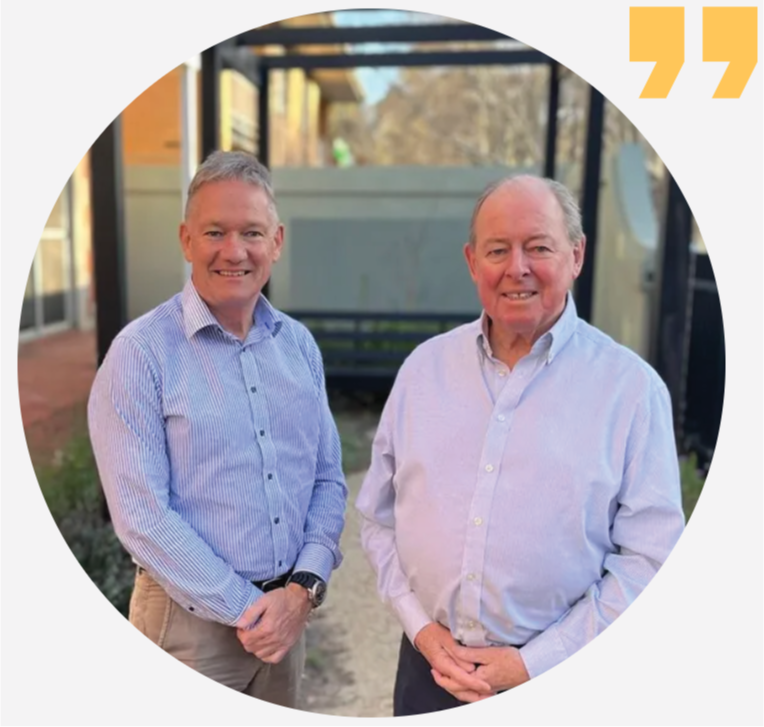
“They listened to our requirements and concerns and formulated a plan tailored to our specific circumstances. We feel they delivered a practical and detailed strategy that suits our needs and reflects our values and we are now working with Butler & Co to implement this.”
Chris Clarke
Partner, Clarke & Brownrigg Chartered Accountants Adelaide
CFO-ONE ADVISORS
“It took us a couple of months to really get clicking, and then around months three or four, we really started to see a huge return on investment which was fantastic.”
Mike Urness, CEO, CFO-One Advisors
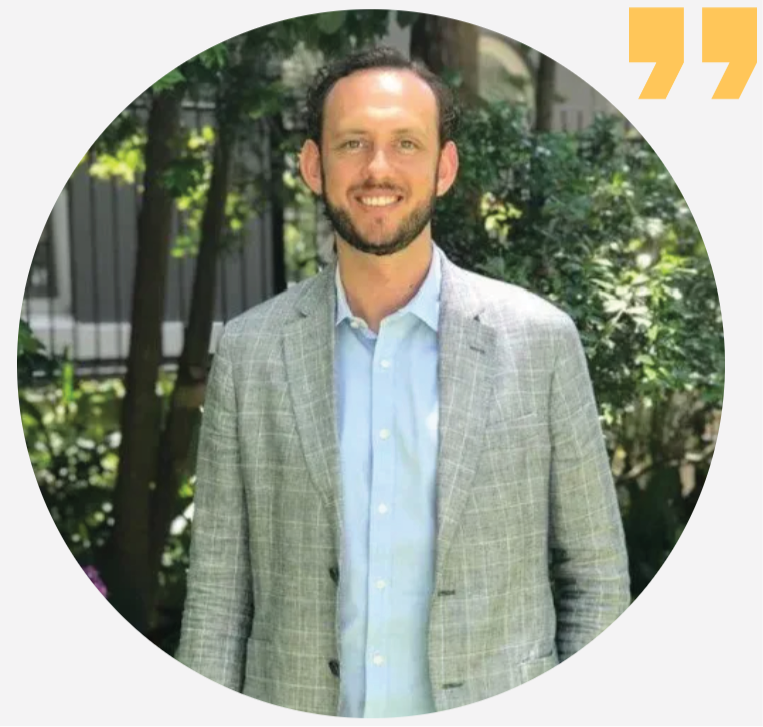
“Wow very promising stats actually…Can’t wait to ramp this up next year given the high enquiry to click through rate and high organic search rate (with no SEO!)”
James Livingston
Founder & Partner,
Arc Medical Accountants
PROPERTY FRONTLINE
"What a positive experience it was working with Trent. What I particularly liked was the mix of tools and feedback that helped me connect with clients in a systemised and targeted way, which saved me so much time."
Debra Beck-Mewing, Founder & CEO, Property Frontline

“Working with Butler & Co has been such a positive experience, helping me develop a suitable marketing strategy and generate high quality leads. Butler & Co are very professional and have a very strategic approach with lead generating. We’ve achieved outstanding results and through my experience, I can honestly recommend Butler & Co and the services 100%.”
Maryanne Drosos
Founder & Director,
Blue Diamond Recruitment
B2B LEADS
“Being a lead gen and marketing guy, I thought my sales process was down pat to be honest...
He [Trent] showed me his methods of conducting sales calls and strategy sessions, which turned out to be way more effective."
Ryan Caswell, Founder, B2B Leads

“I'm so grateful for the support and guidance that Butler & Co’s business coaching has provided me thus far. Without them, I’m not sure if I would have continued in business. I'm now excited for the future and for what's next – we’re only just getting started!”
Kristie Oldfield
Founder & Director,
Parabroker.au
ACHIEVE MARKET LEADING STATUS WITHOUT:

The hassle and risk of taking on a business partner or prematurely hiring and managing a full-time marketing, finance or operations person.
Replacing your existing team members.
Throwing away what is already working.
Schedule a call to see if our approach can help take your business to #1 in your market.
ACHIEVE MARKET LEADING STATUS WITHOUT:
The hassle and risk of taking on a business partner or prematurely hiring and managing a full-time marketing, finance or operations person.
Replacing your existing team members.
Throwing away what is already working.
Schedule a call to see if our approach can help take your business to #1 in your market.
COACHING WILL PAY OFF OVER THE LONG TERM - AND WE GUARANTEE RESULTS.
'Win/Win' is a core value here at Butler & Co Advisory, which is why we offer a return on investment guarantee.
Investment presumes that there will be a return. Otherwise, it’s just an expense.
If you qualify – and do the work – we offer a guarantee:
After 17 weeks of coaching, you will agree that coaching has paid for itself - or we will work with you at no charge until that is true.
This drives us to do great work and ensure we're only commencing relationships with those who we're sure will see commercially positive outcomes.
Our latest articles to help you grow your business

The Real Reason Your Business Still Depends on You
Many business owners eventually build themselves into the busiest, most exhausted employee in the company.
At first, that can feel productive, even necessary.
Clients trust you.
The team relies on you.
Problems get solved quickly because you step in personally.
But over time, something starts to happen.
Simple decisions begin queueing behind the owner. Team members stop making calls without approval. Small operational issues keep finding their way back to the same person.
And even though the business may be growing, the owner often feels increasingly trapped inside it.
One of the most common frustrations I hear from business owners sounds something like this:
“The business just seems to fall apart when I step away.”
Most owners do not arrive here because they are lazy, disorganised, or bad leaders.
Usually the opposite is true.
They care deeply about quality, clients, team standards, and protecting the business they’ve worked hard to build. So naturally, they step in to solve problems and keep things moving.
The challenge is that over time, the business slowly gets trained to depend on them.
That is why one of the most important leadership shifts in business is this:
If the owner wants a better business, first the business needs a better owner.
That is not criticism.
It is recognising that businesses often mirror the leadership habits, systems, communication patterns, and decision-making behaviour of the person running them.
The encouraging part is that this pattern is common, gradual, and solvable.
And once owners begin changing how they lead, the business often improves faster than they expect.
The Business Mirrors the Owner
Most businesses do not become owner-dependent overnight.
It usually happens slowly.
The owner helps with a difficult client situation.
Then jumps into operations to solve a staffing issue.
Then approves every quote.
Then becomes the person everyone checks with before making decisions.
Eventually, the business starts operating like a hub-and-spoke wheel - with the owner sitting in the middle of every spoke.
At that point, growth becomes heavier than it needs to be.
Simple decisions begin waiting for approval.
Team members stop taking initiative because they assume the owner will step in anyway.
Recurring issues keep circling back to the same person.
And the owner feels permanently “on”.
I see this pattern frequently with capable business owners who built the business through hard work, responsiveness, and high standards.
Ironically, the exact behaviours that helped grow the business initially can later become the bottleneck that restricts growth.
Why Hard Work Eventually Stops Working
In the early stages of business, hard work solves almost everything.
You wear multiple hats.
You move quickly.
You respond to problems personally.
You stay close to every client and every decision.
And initially, that works.
Early-stage businesses often reward responsiveness, effort, and hustle.
But eventually there is a transition point.
The skills required to start a business are often different from the skills required to sustainably grow one.
Early-stage growth rewards effort.
Long-term growth rewards leadership capacity.
That usually means the next level of business requires:
better delegation
stronger operational systems
clearer decision-making frameworks
improved accountability
stronger communication rhythms
more strategic thinking
Not simply more hours.
I have worked with owners doing 60-hour weeks who still felt constantly behind because they were trapped solving operational problems instead of building leadership capacity around them.
They were working incredibly hard.
But the business structure itself was creating friction.
A common example is when:
sales approvals bottleneck through the owner,
staff wait for answers before progressing work,
recurring team questions never get documented,
or project updates only happen when the owner personally chases them.
The issue is often not effort.
The issue is operational dependency.
The Identity Shift Most Business Owners Avoid
This is where the conversation becomes more nuanced.
Often the biggest challenge is not systems, staffing, or time management.
It is identity.
Many business owners unconsciously tie their value to being needed.
If they are constantly solving problems, rescuing situations, approving decisions, and staying involved in everything, they feel important and useful.
Makes sense.
The problem is that businesses adapt to whatever behaviour gets reinforced repeatedly.
If the owner consistently steps in to rescue problems:
the team escalates more problems
initiative weakens
ownership decreases
and dependency quietly becomes part of the culture
Over time, some teams stop trying to solve issues independently because experience has taught them the owner will eventually intervene anyway.
Not because the team is incapable.
Because the business has unintentionally trained learned dependency.
This is one of the more difficult leadership transitions owners go through.
Especially for high performers.
Because delegation can initially feel like:
losing control
lowering standards
risking mistakes
becoming less valuable
trusting others with outcomes that matter deeply
But effective delegation is not about becoming absent.
It is about building capability and reducing unnecessary dependency over time.
That is a very different mindset.
Three Leadership Shifts That Change How a Business Operates
1. From Doing to Leading
Instead of asking:
“How do I get this done?”
Start asking:
“How does this consistently get done well without relying entirely on me?”
That subtle shift changes how owners think about:
systems
training
accountability
communication
and team structure
It moves the focus from personal effort to operational design.
2. From Controlling to Coaching
Strong leaders do not build businesses where every decision flows upward.
They build capable people who can make sound decisions without constant supervision.
That requires allowing team members to:
think
learn
problem-solve
and occasionally make mistakes
without the owner stepping in immediately every time discomfort appears.
In many businesses, constant intervention unintentionally weakens initiative.
People become more cautious.
Less decisive.
More dependent.
A healthier leadership model is creating an environment where responsibility and thinking are gradually pushed outward through the business instead of pulled back toward the owner.
3. From Reacting to Designing
Many recurring operational problems are ultimately systems or clarity problems.
If the same issue keeps reappearing, good leadership questions often sound like:
“Where is the process unclear?”
“What expectation was missing?”
“What system would reduce the chance of this happening again?”
“Why does this still rely on memory instead of process?”
That is a very different way of thinking compared to constantly firefighting problems in real time.
Systems Reduce Friction
One of the biggest mindset shifts for growing business owners is realising that systems are not about bureaucracy.
Good systems reduce friction.
They reduce:
confusion
repeated mistakes
unnecessary interruptions
reliance on memory
inconsistent client experiences
avoidable decision fatigue
Most businesses repeat the same core activities every week:
onboarding clients
preparing quotes
following up leads
running meetings
updating projects
handling handovers
reporting numbers
managing recurring communication
If something repeats regularly, it can usually be improved, simplified, documented, or systemised over time.
That does not mean creating a 400-page operations manual nobody reads.
Often the highest-impact improvements are surprisingly simple:
clearer meeting rhythms
defined responsibilities
onboarding checklists
documented follow-up processes
standardised reporting
better communication expectations
I worked with one business owner who was being interrupted constantly throughout the day with operational questions from the team.
After implementing:
clearer weekly planning meetings,
role clarity,
decision-making guidelines,
and several simple documented processes,
the interruptions reduced dramatically within a matter of weeks.
Not because the team suddenly became more intelligent.
Because the business became clearer to operate inside.
Buying Back Leadership Capacity
The goal here is not laziness.
The goal is creating enough operational capacity for the owner to lead properly.
Business owners need time to:
think strategically
review performance
forecast cash flow
improve systems
develop people
review priorities
strengthen decision-making
and protect their own energy and health
Without intentional thinking time, operational work expands to consume all available space.
One exercise I often recommend is conducting a simple time audit.
Ask yourself:
What tasks genuinely require my involvement?
What decisions only I can currently make?
Where am I creating unnecessary dependency?
What work could someone else learn with training and structure?
What tasks drain energy but add relatively little strategic value?
The goal is not removing yourself from the business entirely.
The goal is reducing unnecessary reliance on you for tasks, decisions, and problems that can eventually be handled elsewhere within the business.
What To Do Next
If your business still depends heavily on you, here are four practical places to begin.
1. Identify Your Bottlenecks
Write down:
decisions only you currently make
recurring interruptions
tasks you repeatedly rescue
approvals that queue behind you
questions the team keeps asking repeatedly
Patterns appear quickly when you audit dependency honestly.
2. Delegate One Area Properly
Start small.
Choose one repeatable responsibility and delegate it properly with:
clear expectations
training
checkpoints
accountability
and enough time for learning
Resist the temptation to take tasks back too quickly the first time mistakes occur.
Capability usually develops through repetition, not perfection.
3. Build One Useful System
Start with something repetitive and frustrating:
client onboarding
quote follow-ups
weekly reporting
recurring team questions
job handovers
sales processes
meeting agendas
Document the process simply.
Simple systems consistently followed usually outperform complicated systems ignored.
4. Protect Strategic Thinking Time
Block regular time in your calendar for:
planning
forecasting
reviewing numbers
leadership thinking
system improvement
and proactive decision-making
If strategic thinking only happens “when things calm down,” it usually never happens consistently.
Final Thoughts
A business depending heavily on the owner is not always proof the business is broken.
In many cases, it is simply a sign the business has reached the next stage of leadership complexity.
Most growing businesses go through this transition at some point.
The encouraging part is that these are learnable leadership skills.
Operational dependency can be reduced.
Systems can improve.
Teams can become more capable.
Owners can create more clarity and capacity inside the business.
But that shift rarely happens accidentally.
It usually happens when the owner gradually moves from:
solving every problem personally,
tobuilding a business that can solve more problems without relying entirely on them.
That is often where healthier, more sustainable growth begins.
For many business owners, this transition from operator to leader can be difficult to navigate alone because the habits that helped build the business are often the same habits that eventually constrain it.
This is also where business coaching can become valuable - providing outside perspective, accountability, leadership development, and practical operational guidance to help owners build a business that becomes less dependent on them over time.
Not overnight.
Not perfectly.
But progressively, intentionally, and sustainably.

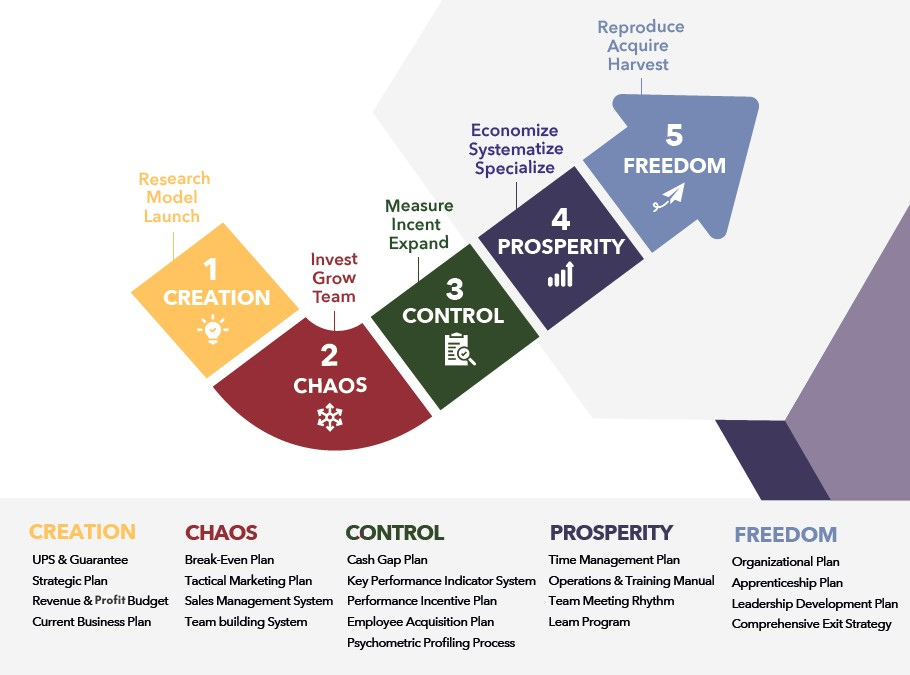
Subscribe To Watch Our Free Methodology Presentation: Learn Our Proven 5-Step System For Transforming Your Business Into A Firm That Runs Smoothly, Profitably and (mostly) without You.
Confirm Your Details To Continue

Subscribe To Watch Our Free Methodology Presentation: Learn Our Proven 5-Step System For Transforming Your Business Into A Firm That Runs Smoothly, Profitably and (mostly) without You.
Confirm Your Details To Continue
Schedule a call to see if our approach can help take your business to #1 in your market.
No pie-in-the-sky. No generic ideas.
No hard sell.
Just straight-forward analysis of your approach to marketing and sales, team-building skills, gross and net profitability, and business transfer readiness.