
Your Business Growth Partner
GUIDING THE 'BEST KEPT SECRETS' TO #1 IN THEIR MARKET
Trent Butler is a Chartered Accountant who acts as a Business Coach, Growth Advisor and Marketing Strategist to growth-minded professional service business owners.
We'll help you increase your profits, implement systems to improve operations and build a team that can operate without you - giving you the money and freedom to live the life you want.
Your Business Growth Partner
GUIDING THE 'BEST KEPT SECRETS' TO #1 IN THEIR MARKET
Trent Butler is a Chartered Accountant who acts as a Business Coach, Growth Advisor and Marketing Strategist to growth-minded professional service business owners.
We'll help you increase your profits, implement systems to improve operations and build a team that can operate without you - giving you the money and freedom to live the life you want.
Just a few of the 'best kept secrets' we've worked with:

"I was attracted to Trent's clarity of what could be achieved, his process driven approach to achieving objectives, coupled with his knowledge and experience. It's been absolute pleasure working with Trent and his team. I am extremely pleased with the results...”
Giles Hill
Director, EQ Property
The Truth Is You Have A Lot On Your Plate When It Comes To Being #1 In Your Market...
You Might Be Struggling With:
Identifying & attracting the right type of higher-value client
- Past efforts have attracted the wrong type of client.
- Prospects just want to know 'price' and don't seem to care about anything else.
- Leads seem to take forever to sign-up and become a client.
You just want to attract higher-value clients who value your expertise and expect to pay a fair premium to work with you.
Monitoring cash flow & tracking return on investment
- You’re unsure what metrics to be tracking.
- You’re not clear on what benchmarks to aim for.
- You're not sure if your marketing is making or losing money.
You just want to understand dollars-in vs dollars-out and whether or not it's all worth it.
Developing process and people to handle the next growth phase
- Growth is starting to cause other operational challenges.
- Getting the right people in the right seats has become easier said than done.
- The team can never quite seem to follow process or consistently achieve what is expected.
- You're getting pulled in a hundred different directions and clients are beginning to notice.
You just want to get everyone on the same page and following processes that actually work and scale.
Figuring out what to do and what not to do next from a marketing and business development standpoint
- Exactly who is our ideal client and how do we get more of them?
- Just what is our point of difference (or do we even have one)?
- Do people see us as a commodity service provider?
- What 'tactics' would work best specifically for our firm and stage of business?
- Where should we be spending our marketing dollars and efforts?
You just want to know what you should be doing and why.
Aligning the leadership team on strategy, planning and execution
- The leadership team is losing sight of the bigger picture (core mission, vision and values).
- Key team members just can't seem to agree on what should be done next, how and why.
- Problems use to be handled quickly but now take weeks/months to resolve.
- Important but not urgent activities are just not getting done.
You just want everyone in the business aligned and beating to the same drum.
Just a few of the 'best kept secrets' we've worked with:






"I was attracted to Trent's clarity of what could be achieved, his process driven approach to achieving objectives, coupled with his knowledge and experience. It's been absolute pleasure working with Trent and his team. I am extremely pleased with the results...”
Giles Hill
Director, EQ Property
THE TRUTH IS YOU HAVE A LOT ON YOUR PLATE WHEN IT COMES TO BEING #1 IN YOUR MARKET...
You Might Be Struggling With:
Identifying & attracting the right type of higher-value client
- Past efforts have attracted the wrong type of client.
- Prospects just want to know 'price' and don't seem to care about anything else.
- Leads seem to take forever to sign-up and become a client.
You just want to attract higher-value clients who value your expertise and expect to pay a fair premium to work with you.
Monitoring cash flow & tracking return on investment
- You’re unsure what metrics to be tracking.
- You’re not clear on what benchmarks to aim for.
- You're not sure if your marketing is making or losing money.
You just want to understand dollars-in vs dollars-out and whether or not it's all worth it.
Developing process and people to handle the next growth phase
- Growth is starting to cause other operational challenges.
- Getting the right people in the right seats has become easier said than done.
- The team can never quite seem to follow process or consistently achieve what is expected.
- You're getting pulled in a hundred different directions and clients are beginning to notice.
You just want to get everyone on the same page and following processes that actually work and scale.
Figuring out what to do and what not to do next from a marketing and business development standpoint
- Exactly who is our ideal client and how do we get more of them?
- Just what is our point of difference (or do we even have one)?
- Do people see us as a commodity service provider?
- What 'tactics' would work best specifically for our firm and stage of business?
- Where should we be spending our marketing dollars and efforts?
You just want to know what you should be doing and why.
Aligning the leadership team on strategy, planning and execution
- The leadership team is losing sight of the bigger picture (core mission, vision and values).
- Key team members just can't seem to agree on what should be done next, how and why.
- Problems use to be handled quickly but now take weeks/months to resolve.
- Important but not urgent activities are just not getting done.
You just want everyone in the business aligned and beating to the same drum.
Professional business coaching can help you:
Improve operations, implement systems and remove bottlenecks so that you get your time back.
Hire and train the right team, communicate better with each other and eliminate people problems.
Grow your business with bigger and better clients.
Overcome cash flow issues and improve your financial management.
Make better decisions and become more profitable.
WELL... YOU CAN!
Butler & Co Advisory is a small team of experienced entrepreneurs coaching aspiring entrepreneurs. We are experts in one thing – growing profitable companies through an appropriate mix of business coaching, growth advisory and marketing strategy consulting.
Whereever you're stuck, we can help:

MORE LEADS, SALES, AGGRESSIVE GROWTH?
YOU GOT IT.
MORE LEADS, SALES, AGGRESSIVE GROWTH? YOU GOT IT.
You won’t believe how easy it is to get your phone ringing with top-shelf, ready-to-buy prospects until you see our methodology for yourself. It’s time for you to set the pace and leave your competitors behind.

RECRUIT & RETAIN WINNERS INSTEAD OF LOSERS?
COMING RIGHT UP.
RECRUIT & RETAIN WINNERS INSTEAD OF LOSERS? COMING RIGHT UP.
Only the very best hiring managers win the perpetual war for talent. You’ll join the ranks of elite recruiters when you learn how the top guns do it. It’s time to get the rock stars you deserve and let the rest work for the others.
CONTROL YOUR CASH AND STASH MONEY AWAY?
EASY.
CONTROL YOUR CASH AND STASH MONEY AWAY? EASY.
Smart business owners know how to control costs, forecast and manage cash, and grow profits. It’s time to control the flow of money through your business and build a large pile of cash in your bank account.
GET YOUR BUSINESS READY TO SELL FOR BIG BUCKS? LET’S ROLL.
Any business can be turned into a cash machine that runs with minimal to zero daily involvement of the owner(s). It’s time to turn your staff into a team that will run your business like they own it, so you can sell it to whomever you wish, whenever you wish.
Who We Work With
We work primarily with established business owners in the following categories.

Advisory Firms
Accounting firms, consulting firms, real estate agencies, medical clinics and marketing agencies.

Professionals
Consultants, coaches, real estate agents, accountants, mortgage brokers, medical practitioners, marketers and freelancers.

Our Founder & Lead Business Coach, Trent Butler
The vision of Butler & Co Advisory is to be the undisputed market leader in business growth advisory services in Australia.
Our plan to achieve that vision is to work hand-in-hand with a smaller volume of exceptionally talented industry experts, taking each of them to 'market-leader' status in their respective niches and/or geographic locations. We then let their results do our talking.
A Chartered Accountant, Trent has over 10 years experience working across three different firms spanning the three 'tiers' of the accounting profession; a small boutique firm, a mid-tier firm and the ‘big 4’ firm – Pricewaterhouse Coopers.
Since founding Butler & Co Advisory in 2018, Trent has worked with over 50+ Australian professional service businesses. He deeply understands the nuances, growth challenges and stakeholder dynamics that present at every stage of a firm's life cycle.
Trent knows how both prospective clients and professional staff conduct their due diligence and choose a professional service provider in the modern digital world.
He understands that as your business grows and thrives, so will our partnership. So let’s talk, we promise it will be a breath of fresh air.
Our Founder & Lead Business Coach, Trent Butler
The vision of Butler & Co Advisory is to be the undisputed market leader in business growth advisory services in Australia.
Our plan to achieve that vision is to work hand-in-hand with a smaller volume of exceptionally talented industry experts, taking each of them to 'market-leader' status in their respective niches and/or geographic locations. We then let their results do our talking.
A Chartered Accountant, Trent has over 10 years experience working across three different firms spanning the three 'tiers' of the accounting profession; a small boutique firm, a mid-tier firm and the ‘big 4’ firm – Pricewaterhouse Coopers.
Since founding Butler & Co Advisory in 2018, Trent has worked with over 50+ Australian professional service businesses. He deeply understands the nuances, growth challenges and stakeholder dynamics that present at every stage of a firm's life cycle.
Trent knows how both prospective clients and professional staff conduct their due diligence and choose a professional service provider in the modern digital world.
He understands that as your business grows and thrives, so will our partnership. So let’s talk, we promise it will be a breath of fresh air.
What is Trent like to work with?
Click on the images below to watch the videos.
LOCATE BUYERS AGENCY
"Their [Trent's] approach with us has been fantastic and I really like that they actually care about their clients. They're actually interested in you getting the best results possible, and that shows up in how they work and how they approach what they do.
They're very strategic. They'll come up with great ideas and great ways in which you can improve on your business."
Shane Hiscock, Founder & Buyers Agent, Locate Buyers Agency

“They listened to our requirements and concerns and formulated a plan tailored to our specific circumstances. We feel they delivered a practical and detailed strategy that suits our needs and reflects our values and we are now working with Butler & Co to implement this.”
Chris Clarke
Partner, Clarke & Brownrigg Chartered Accountants Adelaide
CFO-ONE ADVISORS
“It took us a couple of months to really get clicking, and then around months three or four, we really started to see a huge return on investment which was fantastic.”
Mike Urness, CEO, CFO-One Advisors

“Wow very promising stats actually…Can’t wait to ramp this up next year given the high enquiry to click through rate and high organic search rate (with no SEO!)”
James Livingston
Founder & Partner,
Arc Medical Accountants
PROPERTY FRONTLINE
"What a positive experience it was working with Trent. What I particularly liked was the mix of tools and feedback that helped me connect with clients in a systemised and targeted way, which saved me so much time."
Debra Beck-Mewing, Founder & CEO, Property Frontline

“Working with Butler & Co has been such a positive experience, helping me develop a suitable marketing strategy and generate high quality leads. Butler & Co are very professional and have a very strategic approach with lead generating. We’ve achieved outstanding results and through my experience, I can honestly recommend Butler & Co and the services 100%.”
Maryanne Drosos
Founder & Director,
Blue Diamond Recruitment
B2B LEADS
“Being a lead gen and marketing guy, I thought my sales process was down pat to be honest...
He [Trent] showed me his methods of conducting sales calls and strategy sessions, which turned out to be way more effective."
Ryan Caswell, Founder, B2B Leads

“I'm so grateful for the support and guidance that Butler & Co’s business coaching has provided me thus far. Without them, I’m not sure if I would have continued in business. I'm now excited for the future and for what's next – we’re only just getting started!”
Kristie Oldfield
Founder & Director,
Parabroker.au
ACHIEVE MARKET LEADING STATUS WITHOUT:

The hassle and risk of taking on a business partner or prematurely hiring and managing a full-time marketing, finance or operations person.
Replacing your existing team members.
Throwing away what is already working.
Schedule a call to see if our approach can help take your business to #1 in your market.
ACHIEVE MARKET LEADING STATUS WITHOUT:
The hassle and risk of taking on a business partner or prematurely hiring and managing a full-time marketing, finance or operations person.
Replacing your existing team members.
Throwing away what is already working.
Schedule a call to see if our approach can help take your business to #1 in your market.
COACHING WILL PAY OFF OVER THE LONG TERM - AND WE GUARANTEE RESULTS.
'Win/Win' is a core value here at Butler & Co Advisory, which is why we offer a return on investment guarantee.
Investment presumes that there will be a return. Otherwise, it’s just an expense.
If you qualify – and do the work – we offer a guarantee:
After 17 weeks of coaching, you will agree that coaching has paid for itself - or we will work with you at no charge until that is true.
This drives us to do great work and ensure we're only commencing relationships with those who we're sure will see commercially positive outcomes.
Our latest articles to help you grow your business

SOPs vs Checklists: How to Utilise to Scale Your Business Efficiently
Staying organised is crucial to scaling a business effectively. It leads to consistency, making it easier to achieve continuous growth and improvement.
One of the powerful ways to streamline business operations is through Standard Operating Procedures (SOPs) and checklists. These are tools to help you systemise tasks, specifically the repetitive ones. It reduces errors and empowers your team to function independently. This will free you from the daily operations so you can lead the team and focus on high-impact tasks that will grow the business.
In this article, you’ll learn more about SOPs and checklists and why these are important in improving business efficiencies and employee accountability. I’ll share the steps to develop and use them to scale the business effectively.
Difference Between SOPs and Checklists
SOPs and checklists are two different tools. Both are used to increase efficiency in business processes. However, they serve different purposes and understanding these roles will help you create the right tool to streamline operations.
What is an SOP?
Short for Standard Operating Procedure, SOPs refer to the detailed guide that outlines the steps to perform specific tasks, workflows and processes in business operations. The purpose of an SOP is to ensure consistency no matter who is performing the task.
To scale a business, you don’t just complete a task. You have to ensure it gets done correctly. The SOP does this through clear instructions describing the task and how it should be performed.
For instance, it could be an outline of the client onboarding process. Describe what should happen from the initial meeting to the documentation and onboarding. Identify who is responsible for completing the task and what is expected of them. This ensures every client goes through the same experience and service.
SOPs are ideal for repetitive tasks that require accuracy, tasks that follow a specific order, or tasks that progress in a specific direction. They can also be used to train new employees and ensure that protocols and quality control comply with industry standards.
What is a Checklist?
A checklist is simpler. It’s not as detailed as SOPs and only shows a list of tasks or items that require verification, checking or inspection. You can think of this as a tool supporting SOPs. It ensures nothing is missed when routine tasks are done.
For instance, checklists could list items clients should meet to qualify for onboarding. It doesn’t require an explanation because the people using it should be aware of what to do. They just use it to stay organised. It can also help your team prioritise tasks and ensure nothing is missed.
These checklists can be used to break down tasks and track progress. These can be useful tools to promote accountability.
How to Develop SOPs and Checklists
Now that you know the difference between SOPs and checklists, how can you create them to transform your business operations? Here are steps to create these powerful tools to organise and enhance your team’s performance and business output.
Identify key business processes
Start by identifying the key business processes that require an SOP or checklist. What repetitive tasks should be done consistently and would benefit from being standardised? Apart from client onboarding, these could include lead generation, project management, financial reporting, etc. Go through the whole business operations and pinpoint high-impact areas. Create SOPs and checklists to maximise resources and time spent doing the tasks. This will reduce inefficiencies that could compromise the quality of output or deliverables.
Get the team’s input
If you already have a team, involve them in the creation of the SOPs and checklists. Since they are directly responsible for completing tasks, they have first-hand information about the needs and inefficiencies of the current procedure.
Set a time to brainstorm with them and get their insights on what works and what doesn’t. Have them pen the first draft of the SOP and checklist. Then sit with them to discuss how processes and systems can be improved to increase productivity and elevate the quality of work. Remember, the goal is not just to improve the output. You also want to create a system that’s user-friendly and compliments the people who will do the work.
Define the steps and item list clearly
Clarity is essential to make SOPs and checklists effective in scaling the business. Break down the process and provide simple and easy-to-understand steps. Be clear in identifying what has to be done and who should be doing it. Present it in a sequential order to minimise confusion and reduce mistakes.
When it comes to the checklist, use terms that everyone can understand. If there are jargon or technical terms, define them so there’s no misunderstanding. Provide clear instructions on how the checklist should be completed.
Choose the right presentation format
SOPs and checklists can be presented in various ways. It can be in a written document, flowchart or video. There are even interactive digital tools you can use to make it more engaging. Choose a format that suits the task. Don’t make it too complicated and make sure it fits your team. For instance, you can prepare a video presentation of the SOPs and use it to train new employees. A flowchart in a written document is ideal for processes that require step-by-step instructions. A document is also good enough for a simple checklist.
You don’t have to stick to just one format. You can combine a video and a flowchart if it can present the SOPs better.
Review the SOPs and Checklists
After creating the SOPs and checklists, it’s time to review them. Send them to the team so they can comment on it. If everything checks out, send them to someone else and have them scrutinise it. Ask them if the instructions are clear and if they can understand what is presented.
Test the SOPs in real-world situations and gather feedback from the team. Have someone use the checklist and see if anything is missed. Fine-tune what needs improvement.
Schedule regular audits
Once you’ve implemented the SOPs and checklists, set a schedule to audit them. Business processes evolve as the market changes their preferences. It’s only prudent to check current systems to ensure they’re still applicable. Improve as needed and update your SOPs and checklists to keep them relevant.
Look for new tools, technology and other resources that’ll help your business stay agile and responsive to market changes.
Tips to Create an Effective SOP and Checklist
As you work on your SOPs and checklists, it’s crucial to prioritise clarity and accessibility. Use clear and concise language to keep instructions direct and simple. Instead of “Handle client inquiries as soon as possible” it’s better to say “Respond to client inquiries within 24 hours using the provided email template.” The second instruction is more precise and clear in how the team should handle client inquiries.
While it’s important to provide the right details, don’t forget to be concise and straightforward as well. Don’t overwhelm your team with unnecessary information because that could lead to confusion.
For SOPs, organise the steps in sequential order. This will ensure the team goes through the process correctly. For instance, client onboarding should go through an initial meeting, then an email confirmation of the agreement, followed by the contract finalisation and finally the contract signing. Having the steps in the right order empowers your team and keeps them from missing an important task that could affect the whole project or deliverable.
Another way to make SOPs and checklists clear is by providing visual aids. Use diagrams, animations, images and flowcharts to make complex processes easier to understand. A flowchart looks simple but will take your team through the right process based on how a client reacts. Consider the right format and visual aid to help your team navigate business processes correctly.
Finally, make your SOPs and checklists easily accessible. Store them in a secure file online so people in the field can access a copy from anywhere. Print a hard copy for those in the workplace. This accessibility will ensure people can follow the SOPs and use the checklists anytime and anywhere.
Achieve Business Efficiency with SOPs and Checklists
SOPs and checklists are powerful tools with the ability to streamline business operations to ensure consistency and growth. It can empower your team to do their work independently so you are free to focus on scaling the business.
These tools are not just documents with written instructions. Use them as the foundation of well-structured systems to correct business inefficiencies. It can lead to incredible improvement that can sustain long-term success.
Are you ready to take your business to the next level? Work with a business coach to create SOPs and checklists that are aligned with your vision. I have templates you can use or we can create a new one that fits the unique requirements of your business.
If you want to get started, I’m offering a complimentary brainstorming session so we can identify how to scale your business efficiently. Let’s have a conversation. Book a call here: https://www.butleradvisory.com.au/time-with-trent.
Subscribe To Watch Our Free Methodology Presentation: Learn Our Proven 5-Step System For Transforming Your Business Into A Firm That Runs Smoothly, Profitably and (mostly) without You.
Confirm Your Details To Continue

Subscribe To Watch Our Free Methodology Presentation: Learn Our Proven 5-Step System For Transforming Your Business Into A Firm That Runs Smoothly, Profitably and (mostly) without You.
Confirm Your Details To Continue
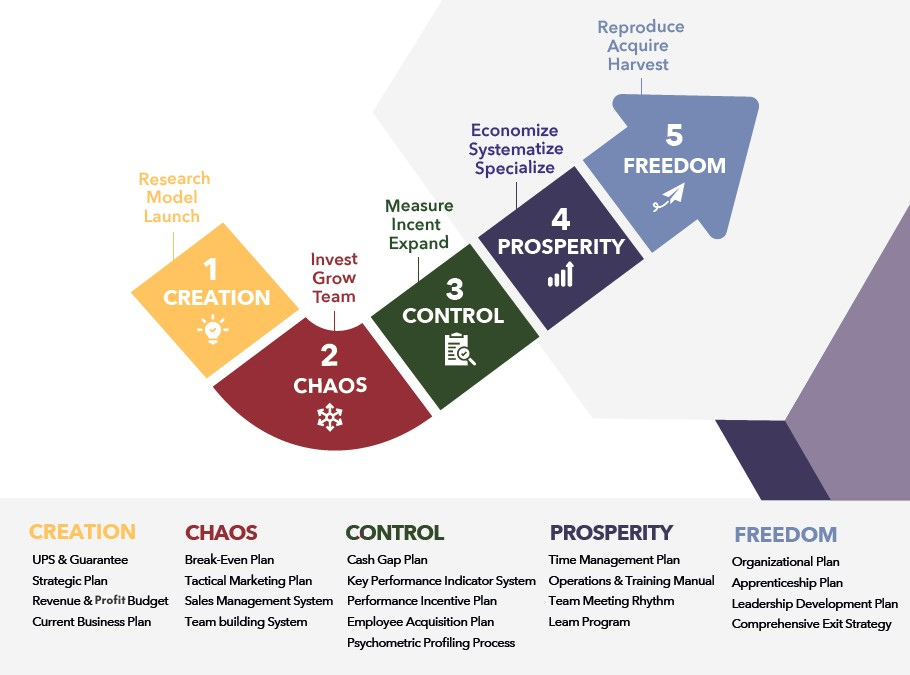
Schedule a call to see if our approach can help take your business to #1 in your market.
No pie-in-the-sky. No generic ideas.
No hard sell.
Just straight-forward analysis of your approach to marketing and sales, team-building skills, gross and net profitability, and business transfer readiness.